Biotechnology news
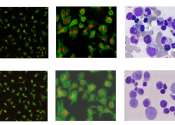
Emerald BioStructures announces discovery of small molecule modulators of PDE4
7 hours ago |
not rated yet |
0
Emerald BioStructures (formerly deCODE biostructures) announced a publication in the December 27, 2009 advance online issue of Nature Biotechnology, detailing the application of structure-based drug design (SBDD) to engine ...
Sniffing out clues to dogs' compulsive behavior
Dec 22, 2009 |
3.8 / 5 (4) |
0
(PhysOrg.com) -- At first glance, a dog chasing its tail seems a harmless, if fruitless, pursuit. But for many dogs and their owners, the habit has a dark side, one that means endless hours and energy spent ...
Researchers engineer bacteria to turn carbon dioxide into liquid fuel
Dec 10, 2009 |
4.7 / 5 (43) |
25
(PhysOrg.com) -- The genetically modified cyanobacterium consumes carbon dioxide and produces the liquid fuel isobutanol by using energy from sunlight.
Scientists get to the root of ancient case of sour grapes
Dec 18, 2009 |
5 / 5 (5) |
0
(PhysOrg.com) -- Scientists in Cambridge have discovered that a lowly grape variety grown by peasants - but despised by noblemen - during the Middle Ages was the mother of many of today’s greatest grape varieties, ...
Study reveals lack of diversity in embryonic stem cell lines
Dec 16, 2009 |
5 / 5 (1) |
0
The most widely used human embryonic stem cell lines lack genetic diversity, a finding that raises social justice questions that must be addressed to ensure that all sectors of society benefit from stem cell advances, according ...
Panda genome resembles dog: Chinese media
Dec 13, 2009 |
4 / 5 (9) |
1
A detailed genome map of the giant panda completed by Chinese scientists has shown that the notoriously shy animal is genetically similar to the dog, state media reported Sunday.
Late-surviving megafauna exposed by ancient DNA in frozen soil
Dec 15, 2009 |
4.5 / 5 (2) |
0
Extinct woolly mammoths and ancient American horses may have been grazing the North American steppe for several thousand years longer than previously thought. After plucking ancient DNA from frozen soil in ...
Pork meat grown in the laboratory
Dec 01, 2009 |
4.5 / 5 (43) |
53
(PhysOrg.com) -- Scientists from Eindhoven University in The Netherlands have for the first time grown pork meat in the laboratory by extracting cells from a live pig and growing them in a petri dish.
Ovaries must suppress their inner male
Dec 10, 2009 |
4.7 / 5 (9) |
0
For an ovary to remain an ovary, the female organ has to continuously suppress its inner capacity to become male. That's the conclusion of a study in the December 11th issue of the journal Cell revealing that t ...
UNSW students sequence genome of the Wollemi Pine
Dec 17, 2009 |
5 / 5 (1) |
0
(PhysOrg.com) -- UNSW students have sequenced the chloroplast genome of the ancient Wollemi Pine - a world first that could reveal how a "dinosaur" of the tree kingdom survived 200 million years of shifting ...
Extra pores on plants could ease global warming: Japan study
Dec 10, 2009 |
3.8 / 5 (10) |
4
Japanese researchers said Thursday they had found a way to make plant leaves absorb more carbon dioxide in an innovation that may one day help ease global warming and boost food production.
Scientists works to develop Christmas tree that doesn't shed needles
Dec 17, 2009 |
not rated yet |
0
After chasing the perfect Christmas tree for three decades, Gary Chastagner could be getting close.
Umbilical cord could be new source of plentiful stem cells, researchers say
Dec 17, 2009 |
not rated yet |
0
Stem cells that could one day provide therapeutic options for muscle and bone disorders can be easily harvested from the tissue of the umbilical cord, just as the blood that goes through it provides precursor cells to treat ...
Cloning plants from seeds
Dec 15, 2009 |
not rated yet |
0
(PhysOrg.com) -- Wageningen geneticists (The Netherlands) are developing a method to replicate the parents of a chosen plant. Known as 'reverse breeding', this will have a big impact for the breeding industry.
Study finds new relationship between gene duplication and alternative splicing in plants
Dec 07, 2009 |
not rated yet |
0
University of Georgia scientists looking to understand the genetic mechanisms of plant defense and growth have found for the first time in plants an inverse relationship between gene duplication and alternative ...