Conn. company's stuffed germ toys catching on
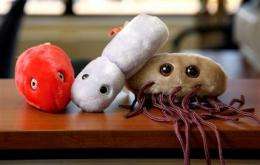
(AP) -- Jim Henson's Muppets made pigs and frogs endearing, and Walt Disney turned a common rodent into a cultural icon.
Now, Drew Oliver thinks it's time for bacteria, viruses and other maligned microorganisms to share the love.
Instead of standard Christmas gifts, a growing number of people are looking under the tree for giant stuffed cold germs, cuddly E. coli, hugworthy heartworm and other oddities from Oliver's Stamford-based company, Giant Microbes. Oliver says the toys are true to the microbes they represent except, of course, for their eyes and enhanced colors.
Once popular mostly as "geek chic" among medical workers and niche groups, the stuffed microbe toys have spawned Facebook fan sites and a subculture of collectors who eagerly await each new release.
They pounced on this fall's newcomers - including measles, rubella and the oh-so-popular diarrhea - and posted pictures on their Facebook pages of their new mini-microbe Christmas tree ornaments.
Being a purveyor of pretend pestilence might seem an odd career turn for Oliver, 40, who was a Chicago corporate attorney when he incorporated Giant Microbes in 2001.
As a father of four, he thought stuffed versions of microbes that cause sore throats, the flu and other common ailments could help children understand the illnesses and avoid some of them with good hygiene.
Sales launched in 2002, but business took a few years to pick up and, even then, largely in niche markets such as museum shops and college bookstores. But in the last few years, the stuffed germs have spread like the common cold microbe that remains its flagship and biggest seller.
"All four of my kids are really into science, and my two oldest girls thought they were the coolest thing ever," said Joslyn Gray, a Giant Microbes fan who lives near Houston. "There's just so much crap out there for kids these days. To find something that's clever and smart and still fun is really great."
Gray discovered Giant Microbes after writing on her blog, http://www.starkravingmadmommy.com , about her 4-year-old son's germ anxiety after preschool lessons on hygiene. She was flooded with suggestions from readers to introduce him to the cuddly versions of the germs he feared so much.
"Having them brought something lighthearted to the subject - and this was after weeks of him wiping down everything he encountered with anti-viral tissues to the point where it was really affecting his life," Gray said.
In recent years, the Giant Microbes line has gone beyond the common microbes to exotic ones such as malaria and sleeping sickness, tiny critters such as dust mites and bed bugs, and water dwellers like copepods and algae.
Some American Red Cross divisions use the stuffed red blood cell in school presentations, and the Education Centre Library serving Ontario's Canadore College and Nipissing University has dozens of Giant Microbes in its lending inventory.
Some students take them to classrooms during their student teaching stints. Others use them as biology study tools.
"You should see the excitement when the new microbes arrive," said Charlotte Innerd, the library's reference and information services manager. "We'll be processing them in the back room and everyone's asking, 'Which ones came in?'"
Oliver will not disclose sales figures for the privately held company, but its success allowed him to leave his attorney job, move back to his hometown of Greenwich and run the business full time. It now has headquarters in Stamford, along with a United Kingdom office and distribution partners worldwide.
The microbes, which Oliver describes as whimsy rooted firmly in science, harken to his college days as an editor at the offbeat Harvard Lampoon humor magazine.
The toys depict each microbe at a million times its actual size or larger, and each comes with an often breezy but informative information card about their origins and avoiding illnesses they spread.
Each has eyes to give them a "face," so to speak. Some also have special features: tiny knife and fork embroidered on the chest of the flesh-eating disease's microbe, for example, and a black cape on the MRSA bacterium known colloquially as the "superbug" for its resistance to certain antibiotics.
"From the beginning they were designed to be whimsical, of course, with the eyes and features like that, but also scientifically sound - to the extent that a plush doll of a germ can be," Oliver said.
Another category that sells well: the microbes carrying sexually transmitted diseases, often popular as joke gifts for Valentine's Day or on college campuses. Needless to say, Oliver adds, those aren't marketed to children.
"The idea is never to make fun of these issues or people who are contending with them," he said. "They can provide an approachable way to talk about what's otherwise, in some circumstances, a dry or very awkward subject."
More information: http://www.giantmicrobes.com
©2010 The Associated Press. All rights reserved. This material may not be published, broadcast, rewritten or redistributed.


