Overcoming the 'fear of Insignificance'
February 14, 2011
Overcoming the 'fear of Insignificance'

In the not-too-distant past, young people aspired to become lawyers and doctors. Now they yearn to achieve the celebrity of a Mark Zuckerberg or Oprah Winfrey -- and these goals extend to adults as well. This has wreaked havoc with our self-image, says a Tel Aviv University psychologist, and undermined our sense of self-worth.

Extensive research from Dr. Carlo Strenger of Tel Aviv University's Department of Psychology demonstrates that over the past ten years have been suffering from an increasing fear of their own "insignificance," something he first recognized in his own clinical practice. Noticing a surge of this fear in his patients, he began an interdisciplinary research project on the phenomenon.

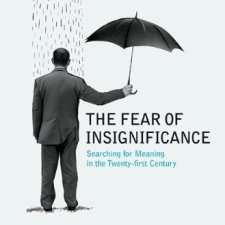
His findings are presented in a new book, The Fear of Insignificance: Searching for Meaning in the Twenty-first Century (Palgrave Macmillan), which illustrates his decade-long investigation into an unprecedented increase in levels of anxiety and depression. It's the first study of its kind to address the issue on a large scale.

The evolution of "homo globalis": Hot or not?

The phenomenon of global angst in the last 10 years is well established by research findings, he notes, but it has never been analyzed and explained in its entirety. "To see the whole elephant and not just its parts," he says, "you need a wide-ranging interdisciplinary framework."

The research reported in his book integrates hundreds of research projects, from economic models to sociological studies and experimental existential psychology. Strenger concludes that the fear of insignificance is due global access — comparing ourselves with the most "significant" people around the world.

"The impact of the global infotainment network on the individual is to blame," says Strenger. "A new species is born: homo globalis — global man — and we are defined by our intimate connection to the global infotainment network, which has turned ranking and rating people on scales of wealth and celebrity into an obsession."

In the past being a lawyer or doctor was a very reputable profession, he explains. Today, even high achievers constantly fear that they are insignificant when they compare themselves to success stories promulgated by the print and electronic media, constantly afraid that their rating on a variety of scales may drop. "This creates highly unstable self-esteem and an unstable society," he says.

In his book, Strenger also attacks new pop-spiritualism that promises instant change and instant relief. Instead of solving an existential unease, such resources just create ever growing disappointment. The cheap-fix guru books for instant spirituality that line airport shelves do not provide any long-term solutions, he says.

The cure? Dump the junk and look inside

Strenger counsels that people stop measuring their achievement through cultural fantasies of riches and celebrity, which reflect a media craze for ranking and rating people and cannot lead to fulfillment. The remedy is a process that he calls "active self-acceptance" through a sustained quest for self-knowledge as part of our process of maturation. The fear of insignificance can only be overcome through strong individual and cultural identity over and above measurable achievement.

He believes that people need to invest as much time in developing their worldviews as their careers. "Stable meaning cannot be found in cheap paperbacks. The media are feeding people spiritual junk food. People should invest time and thought to their worldviews and self-understanding in the same way they invest in medical studies and law school," Strenger advises.

A liberal education is a good way to start, but the process must continue through a lifetime. To live a fulfilling life, we need to engage in a life-long process of learning and evolving, he concludes.

Provided by Tel Aviv University (news : web)


Rank 5 /5 (5 votes)
Relevant PhysicsForums posts
  • stomach not emptying
    createdFeb 16, 2012
  • White reflections in photos in one eye
    createdFeb 15, 2012
  • Is Everyday Technology Killing Us?
    createdFeb 08, 2012
  • Exercise and weight loss
    createdFeb 08, 2012
  • Why do we have head aches? Our brains can't feel anything.
    createdFeb 07, 2012
  • "The end of diseases" by David Agus, interview from Daily Show with Jon Stewart
    createdFeb 04, 2012
  • More from Physics Forums - Medical Sciences

More news stories

CT colonography shown to be comparable to standard colonoscopy

Computerized tomographic (CT) colonography (CTC), also known as virtual colonoscopy, is comparable to standard colonoscopy in its ability to accurately detect cancer and precancerous polyps in people ages 65 and older, according ...

Medicine & Health / Cancer

created 3 hours ago | popularity not rated yet | comments 0

What can animals' survival instincts tell us about understanding human emotion?

Can animals' survival instincts shed additional light on what we know about human emotion? New York University neuroscientist Joseph LeDoux poses this question in outlining a pioneering theory, drawn from two decades of research, ...

Medicine & Health / Neuroscience

created 14 hours ago | popularity 5 / 5 (3) | comments 4 | with audio podcast

Study: Virtual colonoscopy effective screening tool for adults over 65

Computed tomography (CT) colonography can be used as a primary screening tool for colorectal cancer in adults over the age of 65, according to a new study published online in the journal Radiology.

Medicine & Health / Other

created 3 hours ago | popularity not rated yet | comments 0

Injectable gel could repair tissue damaged by heart attack

(Medical Xpress) -- University of California, San Diego researchers have developed a new injectable hydrogel that could be an effective and safe treatment for tissue damage caused by heart attacks.

Medicine & Health / Cardiology

created 17 hours ago | popularity 4.7 / 5 (6) | comments 3 | with audio podcast

Mini molecules could help fight battle of aortic bulge

When aortic walls buckle, the body's main blood pipe forms an ever-growing bulge. To thwart a deadly rupture, a team of Stanford University School of Medicine researchers has found two tiny molecules that may be able to orchestrate ...

Medicine & Health / Cardiology

created 13 hours ago | popularity 5 / 5 (1) | comments 0 | with audio podcast


Researchers build first physical 'metatronic' circuit

(PhysOrg.com) -- The technological world of the 21st century owes a tremendous amount to advances in electrical engineering, specifically, the ability to finely control the flow of electrical charges using ...

Spitzer finds solid buckyballs in space

(PhysOrg.com) -- Astronomers using data from NASA's Spitzer Space Telescope have, for the first time, discovered buckyballs in a solid form in space. Prior to this discovery, the microscopic carbon spheres ...

Faster than light neutrinos? More like faulty wiring

You can shelf your designs for a warp drive engine (for now) and put the DeLorean back in the garage; it turns out neutrinos may not have broken any cosmic speed limits after all.

Physicists surprised by disappearing and reappearing superconductivity in iron selenium chalcogenides

Superconductivity is a rare physical state in which matter is able to conduct electricity -- maintain a flow of electrons -- without any resistance. This phenomenon can only be found in certain materials at low temperatures, ...

Stanford research team cracks animated NuCaptcha

(PhysOrg.com) -- The research team from Stanford University, led by Elie Bursztein, that previously had cracked regular CAPTCHAs and then audio CAPTCHAs, now has also successfully cracked the animated version called NuCapt ...

Going up: Japan builder eyes space elevator

A Japanese construction firm claimed Wednesday it could execute an out-of-this-world plan to put tourists in space within 40 years by building an elevator that stretches a quarter of the way to the moon.