Genetics of Arctic plants under serious threat from climate change, study says
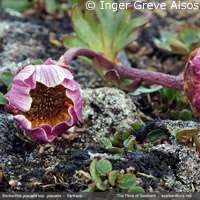
A new EU study by a team of Austrian, French and Norwegian researchers has found that rising temperatures as a result of climate change will have differing genetic consequences within single Arctic plant species. It is hoped that these new results will help focus future conservation efforts in the region and help scientists prioritise which species are important to conserve.
While researchers expect that most plant species will lose part of their current habitat as a result of climate change, this new study shows that within a plant species not all plants will experience the same genetic consequences.
The study was published in the journal Proceedings of the Royal Society B.
As time goes on, climate change will have an increasingly major impact on biological diversity, and nowhere more so than in Arctic and alpine environments, which are exposed to the most extreme climate changes. Therefore, it is vital to investigate the genetic consequences that warming climes have on biological diversity. The team looked at 10,000 samples from 27 plant species in the Arctic and certain alpine environments in Central Europe.
Although there exists a plethora of previous studies that have focused their work on exploring the consequences of climate change on biological diversity, very few have taken into account genetic variations within a specific species, focusing instead on a species as a whole. The results show that species that utilise wind and birds to disperse their seeds will lose less of their genetic diversity in a warmer climate than species that have very localised seed dispersal.
Lead study author Inger Greve Alsos from The University Centre in Svalbard, Norway says: 'This study is the first to use empirical data to estimate loss of genetic diversity by loss of habitat for several plant species under different climate scenarios. Genetic variation is crucial for species to adapt to changing climate. If a species with limited seed dispersal perishes from an area, it means that this species as a whole will experience an irrevocable loss of genetic diversity.'
One example of this is the Glacier crowfoot (Ranunculus glacialis). This species grows only on mountain tops and has little gene flow between populations and is therefore expected to lose a large part of its genetic diversity in a warmer climate. The Dwarf birch (Betula nana) on the other hand, will adapt better to a warmer climate as this species disperses its seeds with the wind and has a long lifespan, it can live for over 100 years. The Dwarf birch doesn't need to worry too much as there is sufficient gene flow between populations.
Species' growth form is also important; as trees and shrubs are usually taller and have a longer lifespan than herbs, they disperse and preserve their genes better than many herb species. Some species can experience a reduction of up to 80% of their habitat, yet still retain over 90% of their genetic diversity. Other species might just lose half of their genetic diversity if their habitat is reduced by 65%.
Many advanced modelling approaches have been used so far to assess the impact of climate change on biodiversity and ecosystems. Among these assessments there are advanced socioeconomic scenarios and yield projections of the distribution of species, communities and biomes, and of the functioning of ecosystems.
However, these approaches have their limitations. Firstly, knowledge and data of past species' distribution is still limited, yet necessary for testing them in the past before projecting them for the future. We need sound estimates of species' long-distance migration rates to assess whether species will be able to keep pace with rapid global change. In addition, some key assumptions of models, such as niche stability over time and/or space, are not well tested. Researchers also believe we need more reliable estimates of uncertainties in model predictions.
More information: Alsos, I.G., et al. (2012) 'Genetic consequences of climate change for northern plants', Proceedings of the Royal Society B. DOI:10.1098/rspb.2011:2363
Journal information: Proceedings of the Royal Society B
Provided by CORDIS


.jpg)


