HiRISE releases 1,200 images, launches viewer tool on Web site
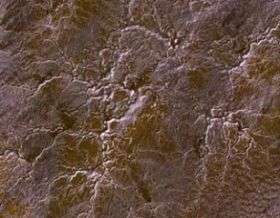
Anyone connected by Internet can now see planet Mars better than at any time in history, through the eye of HiRISE, the most powerful camera ever to orbit another planet.
A University of Arizona-based team that runs the High Resolution Imaging Experiment (HiRISE) camera on NASA's Mars Reconnaissance Orbiter has just released more than 1,200 Mars images to the Planetary Data System, the U.S. space agency's mission data archive.
Not only has the team released 1.7 Terabytes of HiRISE data -- the largest single dataset ever delivered to NASA's space mission data library -- but also a user-friendly way for the public to easily see HiRISE images.
Thanks to tools available on HiRISE's new Webpage at http://hirise.lpl.arizona.edu, any Internet user can quickly pull up and explore the same remarkable images that both thrill and confound scientists.
"These images must contain hundreds of important discoveries about Mars," HiRISE Principal Investigator Alfred McEwen of UA's Lunar and Planetary Laboratory said. "We just need time to realize what they are."
The HiRISE camera takes images of 3.5-mile-wide (6 km) swaths as the orbiter flies at about 7,800 mph between 155 and 196 miles (250 to 316 km) above Mars' surface. For at least the next 18 months, HiRISE will collect thousands of color, black-and-white and stereo images of the Martian surface, resolving features as small as 40 inches across, covering about one percent of the planet.
The team based at UA's HiRISE Operations Center (HiROC) began releasing selected images on the Internet when science operations began in November 2006. Team members began reprocessing all the images taken up to March 25, 2007, using improved calibration, or image correction techniques, in April.
With the first 1,200 images, HiRISE becomes a Planetary Data System (PDS) "data node."
The Planetary Data System (PDS) is used by scientists, students, textbook writers and a growing number of others who follow the latest planetary discoveries. NASA started the archive two decades ago when planetary scientists requested a system to keep the expanding volume of data collected from NASA missions in a form accessible at any time in the future, said NASA's R. Stephen Saunders, the PDS program scientist. The PDS is online at http://pds.jpl.nasa.gov.
"As computers evolve and change, we expect to always be able to access the data, a national treasure," Saunders said.
"A PDS data node is designed to provide access to a particular data set during an active mission, when the data are of greatest interest," Saunders said. Also, "NASA wants to draw on the team's expertise to make sure the data are validated, archived and useful for meeting the objectives of the MRO mission," he said. "NASA has made a large investment in software and hardware at Mars and at UA, and this is a way to capitalize further on that investment."
The newly designed HiRISE Web site gives general users, as well as scientists, a tool to quickly home in on any location within a single huge HiRISE image, which often will be a gigabyte image measuring 20,000 pixels by 50,000 pixels. The tool, which was developed by ITT-Visual Information Solutions in Boulder, Co., is called the IAS Viewer. Users can download it for free directly from the HiRISE Website.
Richard Cooke, president and CEO of ITT Visual Information Systems said, "ITT is committed to supporting the space science community with technology and services that advance the pursuit of discovery. Integrating our IAS technologies with the HiRISE project is very exciting for us, as it helps bring space science applications to a wider community of users, including the general public."
The advantage to IAS-Viewer technology is that it transmits only the amount of data needed to render that portion of the image displayed on the computer screen. That is, each time a user zooms in on a image, he or she doesn't download a completely new set of pixels. Instead, the user is downloading only the higher resolution parts of the image data, which are added to the image data already downloaded by the viewer. The IAS Viewer ultimately renders the selected part of the image in high resolution by adding more and more pixels.
The tool, which also has defense, intelligence and disaster management applications, delivers high quality images regardless of slow or limited network connections.
"I've run this at home, with my little cable modem," said HiROC Manager Eric Eliason. "The tool allows you to zoom in on small pieces of the image quickly, without having to download all of the information in the entire image, which would take hours. IAS Viewer will make our images much more accessible not only to our science team, but to the world."
Source: University of Arizona


