Study Warns Climate Change and Deforestation will Lead to Declines in Global Bird Diversity
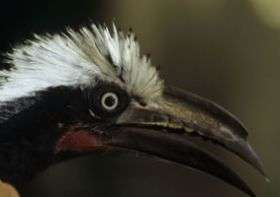
Global warming and the destruction of natural habitats will lead to significant declines and extinctions in the world’s 8,750 terrestria bird species over the next century, according to a study conducted by biologists at the University of California, San Diego and Princeton University.
Their study, the first global assessment of how climate change and habitat destruction may interact to impact the distribution of a large group of vertebrates over the next century, appears in the June 5 issue of the journal PLoS Biology.
The scientists warn in their study that, even under the most optimistic scenarios of controlling climate change and protecting habitats, at least 400 bird species are projected to become imperiled by the year 2050 due to reductions in their geographic ranges of greater than 50 percent. All estimates in the study are based on the assumption that birds will not dramatically shift their geographic ranges in response to a changing climate.
“We found in our study that under certain assumptions by the year 2100, 950 to 1,800 bird species may be imperiled or even driven to extinction by climate change and habitat destruction,” says Walter Jetz, an assistant professor of biological sciences at UCSD and the lead author of the study. “Most of these species are currently not recognized as imperiled.”
“It’s clear that both climate change and habitat destruction pose grave threats to many of the world’s birds and, by analogy, to other species as well,” says David Wilcove, a professor of ecology, evolutionary biology and public affairs at Princeton University and a co-author of the study. “Neither problem can be addressed in a vacuum.”
Climate change and deforestation have already been implicated in the extinctions and geographical range reductions of many terrestrial species of vertebrate animals in recent decades. But the researchers point out that based on global warming and deforestation projections this loss of diversity appears to be accelerating. “Even more dramatic environmental change is projected for this century,” they write in their paper.
To estimate the impact of climate and land use changes in their study, the researchers combined information on four projections of future global warming, agricultural expansion and human population growth from the global Millennium Ecosystem Assessment with current geographic ranges of the world’s 8,750 species of terrestrial birds.
“The most intense climate change is expected at higher latitudes, where birds are relatively species-poor and have large ranges,” says Jetz of UCSD. “Dramatic levels of deforestation and other forms of land conversion are projected to continue or even increase in much of the tropics. There birds and most other taxonomic groups are especially diverse and tend to have small ranges, making them particularly vulnerable to extinction.”
The researchers say that in the near future more bird species may be imperiled by deforestation than by the change of their habitat due to climate change. But together these two factors will be devastating for bird populations.
“This is akin to killing two birds with one stone,” says Wilcove of Princeton. “Deforestation drives tropical species to extinction and also contributes to global climate change. Climate change, in turn, drives temperate species to extinction. The good news is that by halting deforestation we can protect both tropical and temperate birds.”
The researchers say a vastly expanded network of wildlife reserves in the tropics, coupled with more ambitious goals to reduce greenhouse gas emissions and monitor the biodiversity impacts of climate change, will be needed to minimize global extinctions.
“The tragic irony here is that the protection of tropical forests is also one of the strongest buffers against future climate change,” says Andrew Dobson, the third author of the paper and a professor of ecology and evolutionary biology at Princeton. “It is crucial that international environmental policy be swiftly developed to focus both on climate change and on habitat loss; the two are not only intimately related, but are arguably the greatest threats not only to birds, but also to human welfare and economic well-being.”
“These hundreds of bird species headed toward extinction are like thousands of dying canaries in coal mines,” Dobson adds. “It's time we paid attention to them."
“Billions of philanthropic and government dollars are spent annually on clearly crucial biomedical research to avert the future impacts of diseases,” says Jetz of UCSD. “Yet, the support for the necessary research and development to deal with the looming biodiversity crisis, and its multi-fold effects on human well-being, remains at abysmal levels. Drastically increased support for field surveys and impartial biodiversity research is needed to avoid future generations rightfully asking uneasy questions about the limited scope of today’s science support.”
The researchers say their study may also help future investigations because it introduces a novel way of combining geographic socioeconomic projections with biodiversity information.
“Our analysis is only a starting point, but with the increased quality of models and data our approach may offer a powerful, general way for a continued assessment of the future of biodiversity,” says Jetz.
Source: University of California, San Diego


