Goodbye wires... MIT experimentally demonstrates wireless power transfer
Imagine a future in which wireless power transfer is feasible: cell phones, household robots, mp3 players, laptop computers and other portable electronics capable of charging themselves without ever being plugged in, freeing us from that final, ubiquitous power wire. Some of these devices might not even need their bulky batteries to operate.
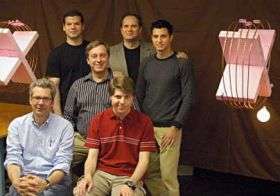
A team from MIT’s Department of Physics, Department of Electrical Engineering and Computer Science, and Institute for Soldier Nanotechnologies (ISN) has experimentally demonstrated an important step toward accomplishing this vision of the future. The team members are Andre Kurs, Aristeidis Karalis, Robert Moffatt, Prof. Peter Fisher, and Prof. John Joannopoulos (Francis Wright Davis Chair and director of ISN), led by Prof. Marin Soljacic. Realizing their recent theoretical prediction, they were able to light a 60W light bulb from a power source seven feet (more than two meters) away; there was no physical connection between the source and the appliance. The MIT team refers to its concept as “WiTricity” (as in wireless electricity). The work will be reported in the June 7 issue of Science Express, the advance online publication of the journal Science.
The story starts one late night a few years ago, with Soljacic (pronounced Soul-ya-cheech) standing in his pajamas, staring at his cell phone on the kitchen counter. “It was probably the sixth time that month that I was awakened by my cell phone beeping to let me know that I had forgotten to charge it. It occurred to me that it would be so great if the thing took care of its own charging.” To make this possible, one would have to have a way to transmit power wirelessly, so Soljacic started thinking about which physical phenomena could help make this wish a reality.
Various methods of transmitting power wirelessly have been known for centuries. Perhaps the best known example is electromagnetic radiation, such as radio waves. While such radiation is excellent for wireless transmission of information, it is not feasible to use it for power transmission. Since radiation spreads in all directions, a vast majority of power would end up being wasted into free space. One can envision using directed electromagnetic radiation, such as lasers, but this is not very practical and can even be dangerous. It requires an uninterrupted line of sight between the source and the device, as well as a sophisticated tracking mechanism when the device is mobile.
In contrast, WiTricity is based on using coupled resonant objects. Two resonant objects of the same resonant frequency tend to exchange energy efficiently, while interacting weakly with extraneous off-resonant objects. A child on a swing is a good example of this. A swing is a type of mechanical resonance, so only when the child pumps her legs at the natural frequency of the swing is she able to impart substantial energy. Another example involves acoustic resonances: Imagine a room with 100 identical wine glasses, each filled with wine up to a different level, so they all have different resonant frequencies. If an opera singer sings a sufficiently loud single note inside the room, a glass of the corresponding frequency might accumulate sufficient energy to even explode, while not influencing the other glasses. In any system of coupled resonators there often exists a so-called “strongly coupled” regime of operation. If one ensures to operate in that regime in a given system, the energy transfer can be very efficient.
While these considerations are universal, applying to all kinds of resonances (e.g., acoustic, mechanical, electromagnetic, etc.), the MIT team focused on one particular type: magnetically coupled resonators. The team explored a system of two electromagnetic resonators coupled mostly through their magnetic fields; they were able to identify the strongly coupled regime in this system, even when the distance between them was several times larger than the sizes of the resonant objects. This way, efficient power transfer was enabled. Magnetic coupling is particularly suitable for everyday applications because most common materials interact only very weakly with magnetic fields, so interactions with extraneous environmental objects are suppressed even further. “The fact that magnetic fields interact so weakly with biological organisms is also important for safety considerations,” Kurs, a graduate student in physics, points out.
The investigated design consists of two copper coils, each a self-resonant system. One of the coils, attached to the power source, is the sending unit. Instead of irradiating the environment with electromagnetic waves, it fills the space around it with a non-radiative magnetic field oscillating at MHz frequencies. The non-radiative field mediates the power exchange with the other coil (the receiving unit), which is specially designed to resonate with the field. The resonant nature of the process ensures the strong interaction between the sending unit and the receiving unit, while the interaction with the rest of the environment is weak. Moffatt, an MIT undergraduate in physics, explains: “The crucial advantage of using the non-radiative field lies in the fact that most of the power not picked up by the receiving coil remains bound to the vicinity of the sending unit, instead of being radiated into the environment and lost.” With such a design, power transfer has a limited range, and the range would be shorter for smaller-size receivers. Still, for laptop-sized coils, power levels more than sufficient to run a laptop can be transferred over room-sized distances nearly omni-directionally and efficiently, irrespective of the geometry of the surrounding space, even when environmental objects completely obstruct the line-of-sight between the two coils. Fisher points out: “As long as the laptop is in a room equipped with a source of such wireless power, it would charge automatically, without having to be plugged in. In fact, it would not even need a battery to operate inside of such a room.” In the long run, this could reduce our society’s dependence on batteries, which are currently heavy and expensive.
At first glance, such a power transfer is reminiscent of relatively commonplace magnetic induction, such as is used in power transformers, which contain coils that transmit power to each other over very short distances. An electric current running in a sending coil induces another current in a receiving coil. The two coils are very close, but they do not touch. However, this behavior changes dramatically when the distance between the coils is increased. As Karalis, a graduate student in electrical engineering and computer science, points out, “Here is where the magic of the resonant coupling comes about. The usual non-resonant magnetic induction would be almost 1 million times less efficient in this particular system.”
WiTricity is rooted in such well-known laws of physics that it makes one wonder why no one thought of it before. “In the past, there was no great demand for such a system, so people did not have a strong motivation to look into it,” points out Joannopoulos, adding, “Over the past several years, portable electronic devices, such as laptops, cell phones, iPods and even household robots have become widespread, all of which require batteries that need to be recharged often.”
As for what the future holds, Soljacic adds, “Once, when my son was about three years old, we visited his grandparents’ house. They had a 20-year-old phone and my son picked up the handset, asking, ‘Dad, why is this phone attached with a cord to the wall"’ That is the mindset of a child growing up in a wireless world. My best response was, ‘It is strange and awkward, isn’t it" Hopefully, we will be getting rid of some more wires, and also batteries, soon.’”
Source: Massachusetts Institute of Technology


