Networking: Sales skyrocket overseas
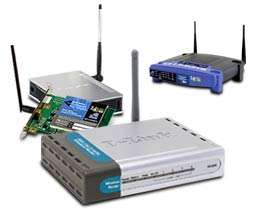
Sales of networking equipment -- routers, switches and the like -- are soaring overseas at major, multinational companies, indicating signs of a global expansion in the technology economy, experts tell United Press International's Networking.
One study, just released by the Reading, U.K.-based research consultancy Canalys, indicates that U.S. companies like Cisco and Juniper are leading the charge as the overall value of the market increased by an astounding 76.3 percent in Europe, the Middle East and Africa, or EMEA.
"Cisco has benefited from strong demand," said Rachel Power, an analyst with Canalys.
The report examines sales through the third quarter of last year -- though it was released just Monday in the United Kingdom.
Other major findings of the study are as follows:
-- Cisco is the lead player in the enterprise router, switch and security market in EMEA.
-- Juniper Networks reported a 127-percent growth rate in its router market share.
-- 3Com is benefiting from a joint venture with Huawei.
"3Com is starting to reap the benefits of the Huawei-3Com joint venture," said Andy Buss, a senior analyst at Canalys. "Mid-range and high-end routers sourced from this recent venture are contributing to a large amount of the growth of 3Com in the router space."
Other research released Monday by the Boston-based Yankee Group provides further insight into what is going on in Europe, the Middle East and Africa in networking. The Global Network Strategies (GNS) surveys indicate that 95 percent of multinational corporations in EMEA are implementing or planning to "implement a converged voice and data network."
Companies noted in the survey include AT&T, British Telecom, China Telecom, Global Crossing, HP, IBM, Sprint and Telefonica.
One major project by Juniper Networks Inc. is with DANTE, or Delivery of Advanced Network Technology to Europe, a Trans-Eurasia Information Network (TEIN2). TEIN2 is intended to extend research and education IP connectivity between the Europe and the Asia-Pacific regions and the research and education communities of the Mediterranean region. The Juniper Networks routing platforms will provide advanced multicasting and IPv6 capabilities, enabling DANTE to improve the performance and reliability of both networks, the company said.
"Research networks such as TEIN2 are very important because they connect researchers around the world and also help advance the deployment and the adoption of technologies such as IPv6 (Internet Protocol Version 6)," said Adam Judd, vice president of Asia Pacific for Juniper Networks. "Security and assurance of the underlying infrastructure is crucial to the success of these advanced projects, and we are very proud to play such a key role in both of these networks."
Whether on a regional or global level, "we are seeing ICT (information communication technology) reshape the enterprise playing field as new market entrants force creative, competitive strategies," said Erica Fox, director, global telecom and wireless services, Yankee Group.
The trend is being seen in Asia and Latin America as well as Europe, the Middle East Africa, according to Yankee Group.
"Sixty percent of multinational corporations are in the process of integrating converged voice and data networks," said the report. "However, uncertainty remains about its cost-effectiveness."
What is more, 66 percent of Brazilian companies have implemented voice and data convergence in "some or all of their network, driven primarily by cost savings and the desire to bandwidth intensive applications," according to the Yankee Group.
Traditional telecom firms do not have these markets to themselves, however. "Increasingly aggressive systems integrators and vendor competitors mean that traditional enterprise service providers must adopt new strategies to win both regional and global business," according to the Yankee Group.
There are opportunities for sales in the United States, as well as overseas, for these technologies. Eleven percent of respondents in the United States have fully deployed Internet Protocol systems, but 55 percent have deployed IP to some extent. The Yankee Group said that 17 percent of U.S. firms are testing IP telephony with "a few users."
Copyright 2006 by United Press International


