'Knockout' technique tested successfully on mice
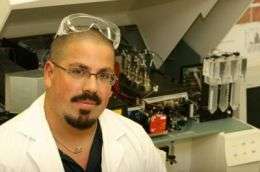
Allergies, like the common cold and asthma, have basically defied the best efforts of modern medicine to cure them. Now, a doctoral candidate at the Hebrew University of Jerusalem School of Pharmacy has come up with a new approach that offers hope for getting rid of them.
For his efforts, Chilean-born Ido Bachelet, a first cousin of the president of Chile, Michelle Bachelet, and a Ph.D. student under the supervision of Prof. Francesca Levi-Schaffer, has been named the winner of one of this year’s Barenholz Prizes for Creativity and Originality in Applied Research. The award, named for its donor, Yehezkel Barenholz, the Dr. Daniel Gof Cancer Re. Miller Professor search at the Hebrew University-Hadassah Medical School, was presented recently during the Hebrew University Board of Governors 70th meeting.
Bachelet’s research has focused on mechanisms that regulate the function of mast cells – the “villains” in triggering allergic reactions. When exposed to allergens, mast cells react violently and release an enormous array of pro-inflammatory substances, of which histamine is a well known example. These substances lead to acute symptoms ranging from stuffy nose, rash, and airway constriction to the lethal shock known from food or venom allergies. Later on, they attract inflammatory cells that will maintain the response, which often persists as a chronic disease.
Although allergies are usually not perceived as lethal, reality is different. In 2005, over 250,000 people died from asthma worldwide. The World Health Organization estimates that this rate will increase by 20 percent within the next decade if urgent action is not taken. Asthma is the most common chronic disease among children.
Bachelet has identified a receptor protein on mast cells, termed CD300a. This receptor has a prominent negative effect on mast cell activity, virtually shutting down the cell from unleashing allergic responses. Unfortunately, CD300a is widely found throughout the immune system, and simply targeting it could result in undesired, overall immune suppression with serious consequences, as can happen with steroids.
In order to overcome this problem, Bachelet and his research colleague, Ariel Munitz, have designed a small, synthetic, antibody fragment that has the unusual ability of recognizing two targets simultaneously -- the receptor CD300a and a mast cell-specific marker. Thus, the antibody targets CD300a only on the surface of mast cells, avoiding suppression of other immune cells. This antibody potently eliminated four different types of allergic diseases in mice. Moreover, when mice suffering from severe chronic asthma received the antibody in nose drops, they completely reverted to normal, healthy mice in less than two months.
This pioneering project, termed RECEPTRA, presents a novel therapeutic strategy for acute and chronic allergic diseases, and is currently being licensed through Yissum, the Hebrew University’s technology transfer company, to pharmaceutical companies for further development and eventual clinical trials.
Based on its enormous potential, Bachelet and his team predict that with further development, their technology will become the first line of allergy therapy in the near future.
Source: The Hebrew University of Jerusalem


