Fridge magnets to fix grammar
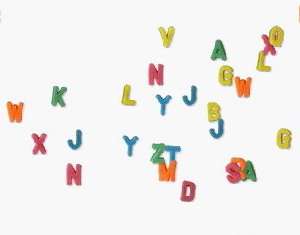
Fridge magnets could soon be correcting bad grammar and replacing words with synonyms, Australian Broadcasting Corporation has reported. Australian digital artist Pierre Proske claims that fridge magnets can be trained to transmit information about themselves between one another and in this way arrange themselves into a grammatical construction.
Proske is currently working with researchers at the Future Applications Lab of Sweden's Viktoria Institute to develop intelligent fridge magnets. The team will present their work later this month at the International Conference on Intelligent User Interfaces in Sydney.
According to Proske, each fridge magnet is made up of a 16-character liquid crystal display. These magnets can randomly generate a word and categorise it as a noun, verb, adjective or adverb. Once categorised, the information is transmitted to any adjacent magnets on the fridge door, enabling them to change words where necessary and construct phrases and sentences in accordance with the rules of grammar.
Words suggested by a magnet can be changed by shaking it. This resets the magnet, causing it to forget its grammer rules. The magnet can now be retrained.
The nature of its training will influence how a magnet’s word selection works. Proske, cites the following example: someone may have two sets of fridge magnets – one at home and one work - communicating via wireless internet. Both sets interpret differently. What one set of magnets reads as, "Crazy kangaroos dream wildly," the other may interpret as, "Drunk wallabies laze around the pool," following the Australian context.
This research, however, is not aimed at releasing a product for the consumer market. Its real purpose is to contribute to the development of more intelligent robots.
Copyright 2006 PhysOrg.com


