New spider is tracked in California
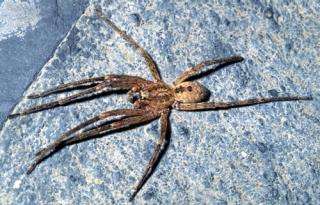
San Francisco Bay-area residents are being asked to help keep track of a new arrival -- the Zoropsis spinimana spider.
The spider, a native of Mediterranean and northern Africa coastal countries, is brown with grayish spots. It's about two inches in length when it stretches its legs.
Scientists aren't certain when or how the arachnid migrated to Northern California, but they told the San Francisco Chronicle it is an apparently harmless spider.
The California Academy of Sciences is asking Bay Area residents to watch for Zoropsis as part of a long-running research project to study how the spider is adapting to Northern California.
Darrell Ubick, an Academy arachnologist, told the Chronicle that Zoropsis is one of a long line of spiders that have become accustomed to living inside houses where the temperature is moderate and insects tend to congregate around food crumbs and other human-generated food supplies.
Unlike most spiders, Zoropsis doesn't make webs to capture its food, rather it wanders around a house until it finds something to eat.
"It can't compete with native species -- it wouldn't survive in the wild easily, but in the house it does just fine," Ubick said.
Let scientists know about the sighting by e-mailing a description of the creature to dubick@calacademy.org . A digital photo of the spider is even more helpful.
Copyright 2006 by United Press International


