Scientists set sights on biomass to reduce fossil fuel dependence
Using plants rather than oil or coal to produce fuels and chemicals could play an essential role in reducing the world's dependence on fossil fuels, according to a group of scientists from the UK and the USA writing today in the journal Science.
The scientists from Imperial College London, Georgia Tech and Oak Ridge National Laboratory have evaluated the scientific and technological potential of a future based on renewable plant matter and biological material such as trees, grasses, agricultural crops, known as biomass. Their conclusions form the basis of a strategic alliance between the three institutions, the AtlantIC Alliance.
Today's paper describes the scientific challenges of creating a facility to process all the components of biomass. Such a facility would make a range of fuels, foods, chemicals, animal feeds, materials, heat and power in proportions that would give maximum value with minimum waste.
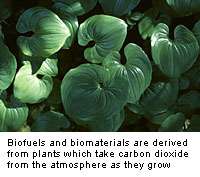
The scientists believe that efficient refining of biomass will be vital for producing renewable products with reduced carbon emissions. Biofuels and biomaterials are derived from plants which take carbon dioxide from the atmosphere as they grow. Their net contribution to the addition of greenhouse gases can be very small if minimal non-renewable energy is used when processing them into useful material or energy products.
Dr Charlotte Williams , from Imperial's Department of Chemistry and one of the authors of the paper, said: "We're looking at a future for biomass where we use the entire plant and produce a range of different materials from it.
"Biomass has a completely different molecular structure compared with hydrocarbons from oil. That means we'll need to develop new techniques so that we can transform plant material into everything from specialty, high value products such as perfumes and plastics to higher volume products such as fuels."
Imperial hopes that the partnership with Georgia Tech and Oak Ridge will combine their complementary areas of expertise and examine the critical issues from alternative angles. The project has been given a major boost by the award of a UK Office of Science and Technology grant to develop the alliance, backed up by internal funding from each of the partners.
Professor Richard Templer, Head of Imperial's Department of Chemistry, said: " No one institution is going to cover all the aspects and issues in this transition from a fossil resource-based present to a bio-based future. This partnership will increase the range of our scientific capacity. It will also enable us to evaluate the scientific and technological possibilities for the bio-based future from different perspectives, and in respect to the different potential for applications in the UK, USA and more widely, for example in developing economies."
Source: Imperial College London


