Portable tourist guides now in service
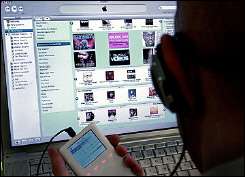
Your iPod might be your next tourist guide if you find yourself in Ireland, just one more example how countries are adapting with evolving technologies to intrigue a new generation of tourists.
A small number of entrepreneurs have already latched onto this idea as national tourism is hitting the bandwagon too.
Dublin Tourism is launching iWalks -- the first in a series of podcasts or audio guides available to tourists, as one way to help boost its tourism business.
"In the past few months, podcasting has taken the Internet by storm and Dublin Tourism wanted to be at the cutting edge of the latest innovative technology available to tourists," said Frank Magee, chief executive of Dublin Tourism. "It's a response to changing tourist needs and interests. Dublin has achieved third position in Europe for urban tourism. We use ecommerce extensively in gaining and maintaining this position."
Updated regularly, the series tells a story of Dublin within 12 themes and are narrated by Irish historian and artists Pat Liddy. Themes include the historic Northside, Viking and Mediaeval Dublin, and Castles and Cathedrals.
The audio series, which also comes with a brochure and map in pdf form can be downloaded from the Web site, is free, financed by Dublin Tourism, a membership based organization.
But Ireland isn't the only one who is using podcasts to attract a generation of tech-savvy tourists -- so has its neighbor Scotland.
"VisitScotland are keen to experiment with new marcomms and podcasting provides an excellent opportunity to target the younger market who are currently using this technology, giving us another route to reach one of our key target markets and it is also the perfect fit with our city break portfolio," said Jillian Swankie, group product manager of Cities & Culture at VisitScotland.
There have been as many as 15,000 views of the podcast cityguide page since the site was launched in November 2005, according to Swankie. VisitScotland along with others in their tourism industry hope this is one way that will help the country's goal of achieving a 50 percent growth in tourism revenues for Scotland by 2015.
The free tour provides accounts of streets of Edinburgh from castles to local attractions and pubs, narrated by Edinburgh-born Vicky Liddelle.
"Today's technology is vitally important as a tool for VisitScotland and the industry to communicate with our customers -- prospective and existing," Swankie said.
But a number of online audio tour business already exist, such as iJourneys who is taking the audio headphone concept at museums to the next level of convenience, using the iPod.
"It's a whole new way to travel ... now you don't have to follow the woman with the red umbrella with a herd behind her," said iJourneys' Elyse Weiner, an Emmy-award winning former network TV news producer. "You're traveling with your best friend."
According to Weiner, audio tours allow tourists to base their schedule on their time and pace without the frustration and expense of in-person guides. Hers in particular provides interesting facts and history as well the best espresso in town, she says, for $14.95.
Weiner's company, which provides audio tours in European countries including Paris, Rome, Florence among others, sold online since last spring using iTunes and Audible.com as well as her site, and has had thousands of downloads already, Weiner said.
If travel sales on the Internet continues to escalate, as Merrill Lynch predicts by the end of 2007 that 39 percent of all travel sales will be online, then digital audio tours is logically the next step.
"There has been evidence out there that the tourism sector often takes the lead in technology," says Professor Dan Erkkila from the University of Minnesota's Tourism Center.
According to Erkkila, the tourism sector adapted to the Internet quickly, and this is no different, as it is logically adapting with consumers' interest in portable media devices and gadgets.
Even though, he says podcasting may be attracting the younger generation, there is evidence that even the Baby Boomer generation -- who has the most disposable outcome -- likes their gadgets too.
"It's a very natural and logical extension of what other people are doing already in life," he said. "It allows people to be free of all strapped to the location."
Copyright 2006 by United Press International


