SMS your ECG to ER
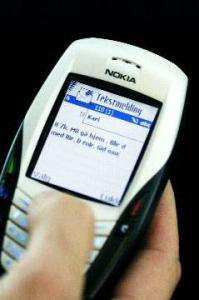
A Bluetooth heart monitor could text your local hospital if you are about to have a heart attack, according to research published today in Inderscience's International Journal of Electronic Healthcare. The device measures electrical signals from the heart, analyses them to produce an electrocardiogram (ECG) and sends an alert together with the ECG by cell phone text message.
Cardiovascular disease is kills almost 20 million people each year, with around 22 million people at risk of sudden heart failure at any one time around the world. Lives can often be saved if acute care and cardiac surgery are carried out within the so-called golden hour. And, survival rates are on the increase as treatments improve. However, this means there are more and more patients whose cardiac health has to be monitored so that follow-up treatment can be given if problems arise. Available methods of heart monitoring usually restrict the mobility of patients to a hospital or a single room.
Thulasi Bai and S.K. Srivatsa of the Sathyabama University in Tamil Nadu, have developed a wearable cardiac telemedicine system that allows post-cardiac patients renewed mobility.
Thulasi Bai's prototype Bluetooth heart monitor records periodically an electrocardiogram (ECG) and transmits the information via radio frequency signals to the patient's cell phone. The modified phone has an added analyzer circuit that checks the ECG signal for signs of imminent cardiac failure. If errant signals are detect, such as any arrhythmia, the cell phone alerts the patient and transmits a sample of the ECG signal to the nearest medical care centre, via the SMS text service, together with patient details.
The device could give patients who have already had one heart attack a much greater chance of receiving life-saving treatment within the golden hour period.
"Our Wearable Cardiac Telemedicine System can help the mobility of patients, so they can regain their independence and return to an active social life or work schedule," explains Bai, "thereby improving their psychological well-being and quality of life."
The researchers are now working on how to enable global-positioning system, GPS, in the modified cell phone, so that the medical centre can more quickly pinpoint the patient. They also hope to improve the level of detail that can be sent from the cell phone to the emergency room using the Multimedia Messaging Services (MMS) as opposed to the SMS text messaging system.
Source: Inderscience Publishers


