Enzyme Eliminated by Cancer Cells Holds Promise for Cancer Treatment
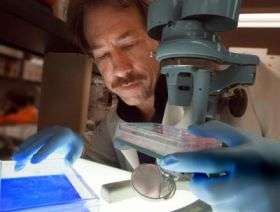
An enzyme that cancer cells eliminate, apparently so they can keep proliferating, may hold clues to more targeted, effective cancer treatment, scientists say.
In a high-stakes tit for tat, protein kinase G enables healthy cells to stay on task to proliferate, differentiate then provide a useful function. Cancer somehow reduces or eliminates PKG and cells get stuck proliferating.
“The bottom line is, in normal tissue, you can see PKG being expressed; but tumors or cell lines that correlate with those tissues don’t have nearly as much,” says Dr. Darren Browning, cancer researcher at the Medical College of Georgia.
Cell lines used for all types of research appear to support his hypothesis. Many are actually cancer cells because of their proclivity to keep producing; Dr. Browning and others have shown PKG is lost in these cells. “You split them once or twice and they kind of lose their character,” he says.
The same appears true for tumors in people, says Dr. Browning, whose lab has found dramatic differences in PKG levels in tumors compared to even nearby, healthy tissue removed in surgery to ensure a cancer-free margin.
The findings made him wonder if the change in PKG level was just an artifact or was critical to cancer survival. “A lot of proteins are lost by cancer cells, so we asked, ‘What happens if we put PKG back into the cancer cells?'”
He took metastatic colon cancer cells, created a system for reintroducing PKG, then put the cells into mice without an immune system. He admits he was disappointed that the PKG-enhanced cells grew but became very interested in how they grew.
Cancer cells without PKG created hard, solid tumors that spread. PKG-enhanced cells created a soft, non-invasive tumor that literally fell apart on contact and seemed to grow in little islands. After consultation with pathologists and others, he realized the PKG-enhanced cells were congregating around the few blood vessels. “We know that cancer cells, particularly colon cancer cells, are very aggressive at bringing blood vessels into the tumor,” he says. Cells poor at recruiting blood vessels don’t grow well, which seems to be the case for PKG-enhanced colon cancer cells.
Now he wants to know how PKG nullifies aggressive metastatic cancer cells. “We think PKG inhibits cancer by getting rid of a cancer-promoting gene called beta-catenin, which slows growth and blocks the tumor’s ability to recruit blood vessels that are needed to grow bigger,” says Dr. Browning, who recently received a $720,000 American Cancer Society grant to pursue his hypothesis. His proposal was ranked number one by the ACS Cell Structure and Metastasis Study Section.
He’s already shown that PKG can reduce vascular endothelial growth factor, or VEGF; anti-VEGF drugs are the focus of numerous anti-cancer trials underway in the country because of VEGF’s critical role in development of new blood vessels. “Maybe by activating PKG or increasing PKG expression in tumors, we are going to reduce the amount of VEGF they produce,” he says. “We don’t know whether PKG has a role in going from normal tissue to the initiation of a tumor, but we think it’s important to the tumor both in terms of angiogenesis and blocking metastasis.” He points to one of his studies in which colon cancer’s spread to the lungs – a common path for metastatic colon cancer – was completely blocked by PKG expression.
A big part of the magic of PKG may be its impact on a gene called beta-catenin, which enables many stem cells, including those in the skin, bone marrow and colon, to proliferate throughout life. Little pits called crypts in the wall of the colon contain Wnt hormone which stimulate nearby stem cells, causing an increase in beta-catenin. The net effect is the colon makes new cells to replace cells lost to the ongoing grind of absorbing water and minerals from food and forming and eliminating waste.
As cells start moving out of the crypt, away from the Wnt hormone, beta-catenin levels go down so cells should stop dividing and start maturing. Essentially all colon cancers have an aberration in this beta-catenin system that prevents normal degradation and allows cell to keep proliferating.
“In the normal cells that line the colon, you don’t see very much beta-catenin. We think PKG in these cells keeps it that way to keep the cells from continuing to proliferate and spread,” says Dr. Browning, who has already shown that in the test tube at least, adding PKG lowers beta-catenin levels. Interestingly, beta-catenin also is known to regulate VEGF expression in colon cancer.
“In a nutshell, the first and most important genetic lesions leading to colon cancer cause increased beta-catenin levels,” says Dr. Browning. “We found PKG can knock down beta-catenin levels by up to 80 percent in some colon cancer cells and we think that is part of the mechanism by which PKG is able to block tumor angiogenesis and metastasis.”
He’s excited by the implications and is involved in extensive collaborations to understand how PKG regulates beta-catenin and how it might be used in cancer therapies.
Evidence of PKG’s effectiveness in fighting colon cancer in humans may already be available. Colon and rectal cancer is the third most common cancer in men and women in the United States but it’s rare in developing countries where residents eat less processed food and ingest more bacteria. Some of these bacteria make a protein, STa, which appears to prevent and even kill colon cancer cells. Dr. Browning believes that PKG is responsible for STa’s anti-cancer effects.
Source: Medical College of Georgia


