Secrets of the Sea Yield Stronger Artificial Bone
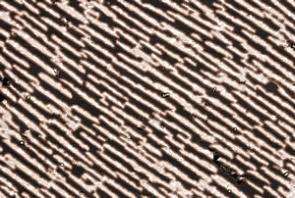
The next generation of artificial bone may rely on a few secrets from the sea. Scientists from the U.S. Department of Energy's Lawrence Berkeley National Laboratory (Berkeley Lab) have harnessed the way seawater freezes to develop a porous, scaffolding-like material that is four times stronger than material currently used in synthetic bone.
Although still in the investigational stages, variations of this substance could also be used in a myriad of applications in which strength and lightness are imperative, such as dental implants, airplane manufacturing and computer hardware.
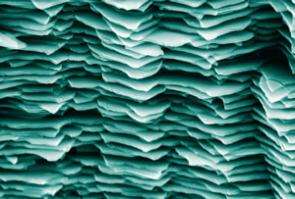
As reported in the January 27, 2006 edition of the journal Science, the Berkeley Lab scientists developed a composite that mirrors the intricate structure of nacre, which is a finely layered substance found in some mollusk shells, such as oysters and abalone. Scientists have long sought to duplicate nacre's strength and lightness in ceramic materials, but nacre's architecture varies at several length scales, from micrometers to nanometers. Replicating all of these scales -- each of which contributes to the overall performance of nacre -- in a synthetic substance is extremely difficult. Then, the Berkeley Lab researchers thought of sea ice.
"We allow nature to guide the process. Seawater can freeze like a layered material, so why not use this property to cast ceramics that mimic nacre," says Antoni Tomsia of Berkeley Lab's Materials Sciences Division, who developed the composite with fellow Materials Sciences Division researchers Sylvain Deville, Eduardo Saiz, and Ravi Nalla.
For the past several years, Tomsia and colleagues have worked to fabricate artificial bone that is more bone than artificial, meaning it adapts to changing physiological conditions and meshes with surrounding tissue over time. In contrast, today's artificial joints are made from metal alloys and ceramics that often trigger inflammation and immune responses, or may require corrective surgery after only a few years. The need for better biomaterials is further underscored by the growing demand for artificial joints. More than 150,000 hip replacement and nearly 300,000 knee replacements were performed in 2000, according to the National Center for Health Statistics. These numbers are expected to swell in the future as baby boomers age.
Because of the pressing need for longer-lasting artificial bone, researchers like Tomsia have developed materials that take their cue from nature. In this case, Tomsia and colleagues turned to the ocean. When seawater freezes, crystals of pure ice form layers, while impurities such as salt and microorganisms are expelled from the forming ice and entrapped in channels between the ice crystals. The result is a layered structure that roughly resembles nacre's wafer-like construction.
The Berkeley Lab team believed this same freezing process could be used to cast an exquisitely layered material that comes close to mimicking nacre's toughness and lightness. They created a watery suspension of hydroxyapatite, which is the mineral component of bone. Then, they froze it. Just like the impurities in sea ice, the hydroxyapatite concentrates in the space between the ice crystals, creating layers and layers of nacre-like material.
They also found that by increasing the rate of this freezing process, the layered structure reduces in scale. Ultimately, they obtained a microstructure that measures one micron, or one-millionth of a meter. In comparison, nacre's structure measures half of a micron.
"We are half a micron away from mimicking nature," says Tomsia.
After the ice is removed via sublimation, the result is a porous scaffolding composed of hydroxyapatite that exhibits striking similarities to nacre's multilayered structure across a wide range of length scales. Like nacre, the surface of each layer is rough, helping the layers lock in place with whatever substance fills the space between them. And some bridges form between the layers, which are believed to increase fracture resistance.
"These characteristics contribute to the scaffolding's mechanical toughness. Cracks don't propagate as easily and more energy is needed to break the material," says Tomsia. "This makes the scaffolding four times stronger than the porous hydroxyapatite materials currently used in bone substitutes."
In the future, the Berkeley Lab scientists hope to tailor the scaffolding so that it fosters bone tissue regeneration. To do this, the space between the scaffolding's layers can be filled with an organic polymer that degrades over the span of several weeks, liberating antibiotics and compounds that stimulate bone growth.
The idea is to place this dense hydroxyapatite-polymer composite in the body where new bone needs grow. Over time, as the polymer degrades, the scaffolding becomes more porous and the growth factor activates, prompting bone cells to invade the newly created pores.
"Porosity will be created in situ to allow bone growth," says Tomsia. "When the polymer degrades, bone cells can proliferate into the porous ceramic scaffolding, allowing old bone to fuse with new bone. We provide the body with scaffolding, and the rest of the work is done by cells."
The Berkeley Lab scientists also hope to create samples that are large enough to work with artificial joints. Their ice-templated fabrication technique also holds promise for many applications in addition to artificial bone. The scaffolding can be made from any solution, not just hydroxyapatite, and the space between the layers can be infiltrated with a wide range of molten metals, polymers, and resins.
Ultimately, their technique may enable the fabrication of new materials with properties that cannot be achieved by nature or conventional processing techniques. It combines nature's sophisticated architectures, which are designed over a wide range of length scales, with scientists' ability to choose from an unlimited number of material combinations.
"People want a strong, light, and porous material, which is almost a contradiction in terms, but nature does it," says Tomsia. "Bone is made from calcium phosphate and collagen, which are both extremely weak. But nature mixes them together at room temperature and without toxic chemical to create something that is very tough -- this fascinates us."
Source: Lawrence Berkeley National Laboratory


