Korean Mummies May Provide Clues to Combat Hepatitis B
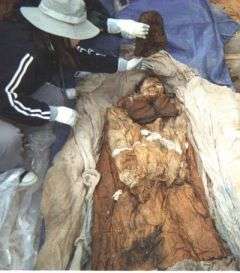
Mummies that have recently been unearthed in South Korea may provide clues on how to combat hepatitis B, according to Prof. Mark Spigelman of the Kuvin Center for the Study of Infectious and Tropical Diseases at the Hebrew University of Jerusalem.
This is the first time that samples of hepatitis B have ever been found on a mummified body. When the virus was discovered in the liver of a 500 year old child, researchers at Dankook University and Seoul National University invited Hebrew University Prof Spigelman to South Korea to verify the findings.
Spigelman and the Liver Unit at Hadassah University Hospital-Ein Kerem in Jerusalem are now part of an international team to conduct research on the mummies, bringing together experts from Dankook University, Seoul National University and University College London.
Spigelman known for his pioneering studies of ancient diseases (palaeoepidemiology) found on mummified bodies from Hungary to Sudan, in his quest to provide answers to the development of diseases affecting us today, such as tuberculosis, leishmania and influenza. The South Korean mummies are particularly well preserved, and could provide crucial information in the evolution of the hepatitis B virus.
An international killer
Hepatitis B causes liver problems and can lead to liver cancer or liver failure, killing approximately one million people each year.
In South Korea, the need to manage the virus is particularly significant, as twelve percent of the population are hepatitis carriers (compared with a world average of five percent). In China, the virus is one of the leading causes of cancer.
Korean mummies?
Until recently, no one even knew that mummies existed in Korea. Korea's ancient tradition of ancestor worship and the belief that at death, the soul rises up and the body has to go back to its natural components, without interference by external elements, meant that mummification was in fact anathema in Korean culture. However, with the take-over of the neo-Confucianist Joseon Dynasty in 1392, changes were made to the former Buddhist burial practices.
The burial process involved laying the body on ice for three to thirty days during mourning, placing the body inside an inner and an outer pine coffin, surrounded by the deceased's clothes, and the covering he coffin in a lime soil mixture. "In some cases, this inadvertently resulted in extremely good natural mummification," says Spigelman.
The building boom in South Korea has meant that many cemeteries have had to be relocated. It is this process which led to the discovery of the mummified bodies.
Know your enemy
The researchers intend to study the genome of the 500 year old virus to see if there have been any significant changes over this time. Spigelman asks: "Five hundred years ago, was it hepatitis B" Could it be that later on, it split from 'X' and became A and B" Was it already evolved" That's what we don't know."
"This is a 'know your enemy' expedition to see if we can get information that can help today's - and tomorrow’s - sufferers," says Spigelman. He believes that knowing what a virus did 500 years ago helps us understand what it will do as it continues to evolve, and will ultimately alter the practice of public health officials in combating it.
Source: The Hebrew University of Jerusalem


