Under magnetic force, nanoparticles may deliver gene therapy
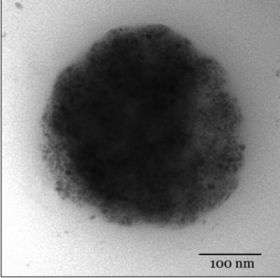
After binding DNA segments to tiny iron-containing spheres called nanoparticles, researchers have used magnetic fields to direct the nanoparticles into arterial muscle cells, where the DNA could have a therapeutic effect. Although the research, done in cell cultures, is in early stages, it may represent a new method for delivering gene therapy to benefit blood vessels damaged by arterial disease.
The nanoparticles are extremely small, ranging from 185 to 375 nanometers (a nanometer is one billionth of a meter, or a millionth of a millimeter). For comparison, red blood cells are ten to 100 times larger. The researchers were able to control the nanoparticle size by varying the amount or composition of solvents they used to form the nanoparticles.
The magnetically driven delivery system also may find broader use as a vehicle for delivering drugs, genes or cells to a target organ. “This is a novel delivery system, the first to use a biodegradable, magnetically driven polymer to achieve clinically relevant effects,” said study leader Robert J. Levy, M.D., the William J. Rashkind Chair of Pediatric Cardiology at The Children’s Hospital of Philadelphia. “This system has the potential to be a powerful tool.”
The proof-of-principle study, performed on vascular cells in culture, appears in the August issue of the FASEB Journal, published by the Federation of American Societies for Experimental Biology.
Impregnated with iron oxide, the nanoparticles carry a surface coating of DNA bound to an organic compound called polyethylenimine (PEI). The PEI protected the DNA from being broken down by enzymes called endonucleases that were present in the cell cultures and which occur normally in the bloodstream.
The DNA was in the form of a plasmid, a circular molecule that here carried a gene that coded for a growth-inhibiting protein called adiponectin. By applying a magnetic field, the study team steered the particles into arterial smooth muscle cells. Inside each cell, the DNA separated from the particle, entered the cell nucleus, and produced enough adiponectin to significantly reduce the proliferation of new cells.
In a practical application, such nanoparticles could be magnetically directed into stents, the tiny, expandable metal scaffolds inserted into a patient’s partially blocked vessels to improve blood flow. Many stents eventually fail as cells grow on their surfaces and create new obstructions, so delivering anti-growth genes to stents could help keep blood flowing freely.
The materials composing the nanoparticles are biodegradable, so they break down into simpler, nontoxic chemicals that can be carried away in the blood. “Previous researchers had shown that magnetically driven nanoparticles could deliver DNA in cell cultures, but ours is the first delivery system that is biodegradable, and therefore, safer to use in people,” said Levy.
“This delivery system may be a useful tool for delivering nonviral gene therapy, because it efficiently binds and protects DNA in blood serum and delivers it to cells,” added Levy. As a nonviral method, it avoids the unwanted immune system responses that have occurred when viruses are used to deliver gene therapy.
Levy said his team would pursue further studies into the feasibility of using the nanoparticles for gene therapy in blood vessels damaged by vascular disease. He suggested that the nanoparticles might find broader application, such as delivering gene therapy to tumors, or carrying drugs instead of or in addition to genes. Another possibility is that after preloading genetically engineered cells with nanoparticles, researchers could use magnetic forces to direct the cells to a target organ.
Furthermore, researchers might deliver nanoparticles to magnetically responsive, removable stents in sites other than blood vessels, such as airways or parts of the gastrointestinal tract. “We could remove the stent after the nanoparticles have delivered a sufficient number of genes, cells or other agents to have a long-lasting benefit,” he added.
Source: Children's Hospital of Philadelphia


