Cell damage caused by brushing may help keep gums healthy
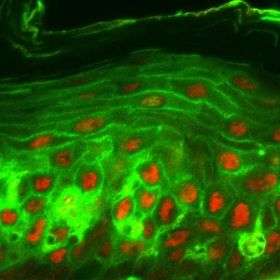
One way regular brushing may help keep gums firm and pink is, paradoxically, by tearing open cells, researchers have found.
Bristles wielded with even gentle force tear holes in the epithelial cells that line the gums and tongue, causing a momentary rupture, researchers at the Medical College of Georgia in Augusta report in the cover article of the August issue of the Journal of Dental Research.
Tearing enables calcium, abundant in saliva, to move into the cells, triggering internal membranes to move up and patch the hole, says Dr. Katsuya Miyake, MCG cell biologist and the paper’s co-first author. But in the seconds that repair takes, growth factors that promote growth of collagen, new cells and blood vessels leak out of injured cells.
Cell injury also turns on expression of the c-fos gene, an early-response gene often activated under stress that may be the first step in a response such as cell division or growth, says Dr. Paul L. McNeil, MCG cell biologist and corresponding author.
“It’s very clear that brushing your teeth is a healthy thing to do; no one questions that brushing removes bacteria and that’s probably its main function,” Dr. McNeil says. “But we are thinking that there might be another positive aspect of brushing. Many tissues in our bodies respond to mechanical stress by adapting and getting stronger, like muscles. We think the gums may adapt to this mechanical stress by getting thicker and healthier. It’s the no pain, no gain theory the same as exercising.”
The research team, which also includes Dr. Kaori Amano, dental researcher, Kyorin University of Medicine in Japan, and Dr. James L. Borke, MCG physiologist, injected a fluorescent dye into the blood stream that can only get into torn cells. They then brushed the teeth, gums and tongue of rats with a modified electric toothbrush. “We saw lots of bright cells,” says Dr. Miyake, co-director of the MCG Cell Imaging Core Facility.
“… (W)e suggest that, in addition to its well-know ability to remove bacteria and their harmful products from teeth, brushing may, by causing plasma membrane disruptions, lead to local cell-adaptive responses ultimately of benefit to gingival health,” the researchers write.
“Viewing brushing from this novel context, as a direct physical stimulus that promotes gum health, opens up new avenues for research,” Dr. McNeil says. One immediate area of interest is to identify chemical signals produced by wounded oral cavity cells that could promote gum health. Moreover, the method and/or type of brush might strongly influence the extent of epithelial cell-wounding and subsequent liberation of factors that promote gum health, Dr. McNeil says.
Interestingly researchers found that brushing injures not only epithelial cells on the tongue’s surface but muscle cells underneath as well. “The mechanical forces must have been transmitted through the intact epithelium to the muscle cells,” says Dr. McNeil, director of the MCG Cell Imaging Core Facility. “It means our epithelium is tough and maintains a nice, resilient barrier but, not surprisingly, since it’s not a hard surface, it transmits forces quite readily.”
The gum, tongue and other surfaces in the oral cavity are covered with layers of epithelial cells that serve as a natural boundary between what goes in the mouth and the blood supply. As food digests, nutrients and other desirables move across the single layer of epithelial cells lining the gastrointestinal tract to get to the blood.
Source: Medical College of Georgia


