Native fruits bear sweet antioxidants
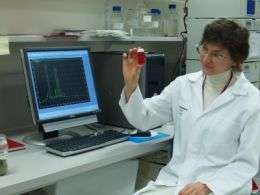
Twelve native Australian fruits that are exceptional sources of antioxidants have been identified in research published in the journal Innovative Food Science & Emerging Technologies.
The fruits: Kakadu plum, Illawarra plum, Burdekin plum, Davidson’s plum, riberry, red and yellow finger limes, Tasmanian pepper, brush cherry, Cedar Bay cherry, muntries and Molucca raspberry; were compared with blueberries (cultivar Biloxi) – a fruit renowned for its high antioxidant properties.
“Finding unique food ingredients and flavours with health-promoting properties is a key market requirement these days,” says research team leader, Food Science Australia’s Izabela Konczak. “And, by encouraging growers to cultivate native fruits, we are also contributing to the growing need to ensure agriculture becomes more sustainable.”
Co-author Dr Michael Netzel – a post-doctoral researcher at Food Science Australia supported by Germany’s Alexander von Humboldt Foundation – says the native fruits were shown to be rich sources of antioxidants, with stronger radical scavenging activities than blueberries.
“Compared to blueberries’ TEAC value of 39.45 trolox equivalents per gram, Kakadu plum and Burdekin plum had TEAC values of 204.8 and 192.0 trolox equivalents per gram,” Dr Netzel says.
“Using native Australian fruits as a source of phytochemicals for use in foods could offer enormous opportunities for the food and functional food industries.
“Studies to identify additional antioxidant compounds as well as clinical trials for testing the fruits’ bioactivity in vivo, are in progress.” he says.
While Australian native fruits have been eaten by indigenous people for thousands of years, this is the first scientific study of the fruits as a source of antioxidants and confirms preliminary results published in the Journal of Agricultural and Food Chemistry in 2006.
This research supports CSIRO efforts to realise the potential of Australia’s fledgling native food industry which is currently estimated to be worth $14 million annually.
Source: CSIRO Australia


