CU-Boulder, NASA to launch K-12 experiments to space station Aug. 7
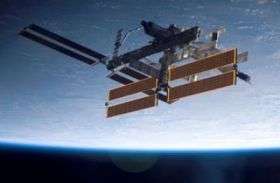
For the second time in eight months, a NASA space shuttle will carry a suite of University of Colorado at Boulder experiments to the International Space Station in an educational effort involving thousands of K-12 students around the world.
Slated for launch Aug. 7 from Cape Kennedy, Fla., the space shuttle Endeavour will carry three experiments designed and built at CU-Boulder's BioServe Space Technologies Center. Participants in the CSI-2 effort will chart the growth and development of tomato plants, yeast cell genes and a crystal "garden" in the weightless environment of space, which will be compared with similar experiments being conducted in K-12 classrooms around the world, said BioServe Director Louis Stodieck.
The launch follows the December 2006 launch aboard Discovery of the BioServe payload, CSI-1, which carried plant seeds and tiny worms to the space station and involved hundreds of students from more than a dozen Front Range K-12 schools in Denver, Boulder, Longmont and Fort Collins. The activity of the seeds and worms was monitored remotely by about 7,000 students from the United States, Canada and Malaysia, who conducted similar classroom experiments on Earth using educational materials made available on the World Wide Web.
BioServe is joining forces with two educational partners for the CSI-2 mission. One is Orion's Quest, a Web-based education program based in Detroit that works closely with NASA and various schools on K-12 space education efforts. The second is the Adventures of the Agronauts progam at North Carolina State University, a free, online science curriculum with a space biology theme for elementary students.
During the mission, images and video of the experiments will be downlinked to BioServe's payload operations and control center on campus and then provided to the educational partners for distribution to participating K-12 schools, along with accompanying curriculum materials. BioServe hopes to engage additional K-12 schools for the upcoming 2007-08 school year in the United States and abroad, he said.
"CSI-1 was a very successful educational venture that generated a great deal of interest," said Stodieck, principal investigator for the payload. "We anticipate as many as 15,000 students and teachers will be directly participating in CSI-2 using educational materials available through our educational partners on the Internet."
One CSI-2 experiment will look at the seed germination and growth of several varieties of miniature, drought-tolerant tomato plants in space, which will sprout from seeds and grow to more than four inches -- mature enough, potentially, to bear fruit. The experiment has implications for growing food during long-term space expeditions and for developing heartier varieties of tomato plants for farmers and gardeners on Earth.
The second experiment will involve yeast cells, which have similar regulatory mechanisms to mammal cells and are model organisms for human systems, he said. Scientists have "knocked" out particular genes of the yeast cells, which will be studied through multiple generations in the low-gravity environment of space, he said.
The yeast experiments also have applications to CSI-1 experiments on tiny worm species that reproduced through more than 20 generations on the space station - the most by any organism ever in space. The worms are being analyzed by several research groups interested in gene mutations caused by extended space radiation, a concern for NASA astronauts on deep-space missions, said BioServe researcher Carla Goulart.
The third experiment, a fluid physics test, will examine the growth of metallic salts in the low gravity of the space station. A previous BioServe educational experiment in space indicated that silicate salts grow outward and then in a rotational pattern, unlike silicate gardens on Earth, which grow upward, said Stodieck.
All three experiments will fly on BioServe's Commercial Generic Bioprocessing Apparatus, or CGBA, a suitcase-sized payload that has been used to carry out life science and biomedical experiments on more than a dozen shuttle missions.
BioServe also is collaborating with Aerogrow Co. of Longmont, Colo., which provided support and testing for the tomato-plant experiment, and with the Park Seed Co. of Anderson, S.C., which is donating tomato seed packets to schools. In a separate Endeavour experiment, BioServe is collaborating with a biotechnology company using mice to test a therapeutic drug to prevent muscle loss in space.
One of the seven Endeavor astronauts, schoolteacher Barbara Morgan, will take part in several educational activities on the space station, said Stodieck. Morgan was the back-up to astronaut Christa McAuliffe, known as the "teacher in space," who died along with six fellow astronauts in the 1986 Challenger space shuttle explosion that also killed CU-Boulder alum Ellison Onizuka.
Source: University of Colorado at Boulder


