Making 'Pavlov's Cockroach'
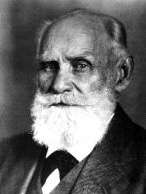
February 5, 2006 Ivan Pavlov (1849-1936)

Ivan Pavlov (1849-1936)

In an experiment that made him a household name, the Russian scientist Ivan Pavlov a century ago got dogs used to hearing a bell every time they were fed. The dogs soon started drooling whenever they heard the bell.

Now, scientists are trying to get cockroaches to follow the same trailblazing path as “Pavlov’s Dog,” the words still commonly used in reference to Pavlov’s work (though he really used more than one dog).

Drooling, or salivation, is a natural physiological response to the presence of food. The salivation aids digestion.

Hidehiro Watanabe and Makoto Mizunami of Tohoku University in Sendai, Japan, offered cockroaches a whiff of peppermint two seconds before giving them some sugar.

After repeating this three times, they found that cockroach nervous system cells that control salivation started firing signals more strongly whenever the peppermint odor came. They also found that this effect, measured by means of tiny implanted electrodes, persisted a day later.

The salivation had nothing to do with an enjoyment of the peppermint odor itself, they argued. They noted that cockroaches naturally prefer vanilla odor, but that when they tried the same experiment using vanilla but no food, there was no increase in salivation-related brain activity.

Watanabe and Mizunami reported that they haven’t yet measured the actual saliva levels in the cockroaches during such experiments, but that they’re working on this.

The process in which an organism starts to behave a certain way as a result of learning a connection between two previously unrelated stimuli, as in Pavlov’s experiment, is called conditioning.

“Classical conditioning of salivation has been extensively studied in mammals, especially in dogs,” wrote Watanabe and Mizunami in a paper describing their findings, in the Feb. 15 issue of the Journal of Experimental Biology. “But, as far as we know, it has not been reported in any non-mammalian species,” they added, although conditioning involving effects other than salivation has been.

The new findings shows cockroaches should serve as good models for studying how individual brain cells participate in conditioning, they added.

by Jack Lucentini - World Science (http://www.world-science.net)

The original story can be found here.

© 2005 World Science. Published with permission of World Science.


Rate this story - 4.1 /5 (15 votes)


February 5, 2006 all stories

Comments: 0

4.1 /5 (15 votes)

  • hide
  • Related Stories

  • Scientists create a 'Pavlov's cockroach'
    created Jun 13, 2007 | popularity not rated yet | comments 0
  • Physiological response may explain why some severely obese patients overeat
    created Jun 09, 2009 | popularity not rated yet | comments 0
  • Towards understanding bluetongue outbreaks
    created Aug 14, 2008 | popularity not rated yet | comments 0
  • Chinese-produced fresh ginger is recalled
    created Jul 30, 2007 | popularity not rated yet | comments 0


Other News

Study challenges bird-from-dinosaur theory of evolution - was it the other way around?

Study challenges bird-from-dinosaur theory of evolution - was it the other way around?

Other Sciences / Archaeology & Fossils

created 16 hours ago | popularity 3.7 / 5 (11) | comments 4 | with audio podcast

(PhysOrg.com) -- A new study just published in the Proceedings of the National Academy of Sciences provides yet more evidence that birds did not descend from ground-dwelling theropod dinosaurs, experts say, a ...


New research reveals burglars have changed their 'shopping list'

Other Sciences / Social Sciences

created 4 hours ago | popularity 3.5 / 5 (2) | comments 3

Globalisation, and particularly cheaper electronic goods from China and the Far East, has altered behaviour among Britain's burglars according research in progress at the University of Leicester.


TED takes on 'What the world needs now'

Other Sciences / Other

created 4 hours ago | popularity not rated yet | comments 0

Let the mind-bending begin! A TED conference that attracts brilliant minds and challenges them to solve humanity's ills got underway Tuesday in the southern California city of Long Beach.


'Counterfactual' thinkers are more motivated and analytical, study suggests

Other Sciences / Social Sciences

created 20 hours ago | popularity 4.4 / 5 (5) | comments 6 | with audio podcast

(PhysOrg.com) -- "If only I had..." Almost everyone has said those four words at some time. Rather than intensifying regret, '"what if" reflection about pivotal moments in the past helps people to weave a coherent life story, ...


Office romance? Not a problem most of time: study

Office romance? Not a problem most of time: study

Other Sciences / Social Sciences

created 18 hours ago | popularity not rated yet | comments 1

(PhysOrg.com) -- Pam and Jim on The Office. Meredith and McDreamy on Grey's Anatomy. Television shows depict many workplace romances, but in the real world how do co-workers view love on the job? According ...