Brain changes significantly after age 18, study says
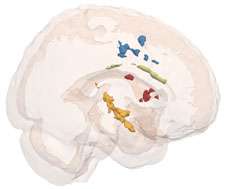
Two Dartmouth researchers are one step closer to defining exactly when human maturity sets in. In a study aimed at identifying how and when a person's brain reaches adulthood, the scientists have learned that, anatomically, significant changes in brain structure continue after age 18.
The study, called "Anatomical Changes in the Emerging Adult Brain," appeared in the Nov. 29, 2005, on-line issue of the journal Human Brain Mapping. It will appear in a forthcoming issue of the journal's print edition.
Abigail Baird, Assistant Professor of Psychological and Brain Sciences and co-author of the study, explains that their finding is fascinating because the study closely tracked a group of freshman students throughout their first year of college. She says that this research contributes to the growing body of literature devoted to the period of human development between adolescence and adulthood.
"During the first year of college, especially at a residential college, students have many new experiences," says Baird. "They are faced with new cognitive, social, and emotional challenges. We thought it was important to document and learn from the changes taking place in their brains."
For the study, Baird and graduate student Craig Bennett looked at the brains of nineteen 18-year-old Dartmouth students who had moved more than 100 miles to attend college. A control group of 17 older students, ranging in age from 25 to 35, were also studied for comparison.
The results indicate that significant changes took place in the brains of these individuals. The changes were localized to regions of the brain known to integrate emotion and cognition. Specifically, these are areas that take information from our current body state and apply it for use in navigating the world.
"The brain of an 18-year-old college freshman is still far from resembling the brain of someone in their mid-twenties," says Bennett. "When do we reach adulthood? It might be much later than we traditionally think."
Source: Dartmouth College


