Traditional Chinese exercises may increase efficacy of flu vaccine
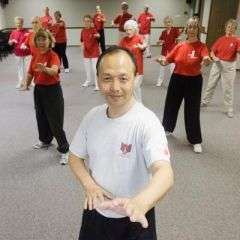
Move on mosquitoes. Step aside sweat bees. Before long, another unwelcome, but predictable, pest will return: the dreaded, oft-spotted flu bug.
But as this year’s sniffling-sneezing season approaches, there’s also a hint of hope present in the pre-germ-season air. In a study scheduled for publication in the August issue of the American Journal of Chinese Medicine, a team of kinesiologists at the University of Illinois suggest that older adults who adopt an exercise regimen combining Taiji and Qigong may get an extra boost from their annual flu shot.
“We have found that 20 weeks of Taiji can increase the antibody response to influenza vaccine in older adults,” said the study’s lead author Yang Yang, an adjunct professor of kinesiology and community health, and a Taiji master with 30-plus years of experience as a practitioner and instructor.
“In this study, we found that five months of an easily performed behavioral Taiji and Qigong intervention could improve the magnitude and duration of the HI anti-influenza antibody titer response in a small cohort of older adults,” write the authors, who also include Karl S. Rosengren, a U. of I. professor of psychology and of kinesiology and community health, and Jeffrey A. Woods, a kinesiology and community health professor who researches the effects of exercise on immune function. Rosengren and Woods helped design the study. Other co-authors are former U. of I. graduate students Rachel A. Mariani and Jay Verkuilen, and Scott A. Grubisich and Michael Reed of the Center for Taiji Studies, Champaign.
According to Yang, one problem with the flu vaccine is that older adults often do not reach what are considered to be “protective levels” after receiving the vaccination.
On average, he said, the Taiji group had much higher antibody responses to the vaccination than the control group, and the percentage of persons who achieved protective levels also was higher in the Taiji group. However, because of the small sample size, the percentage of persons from the Taiji group that achieved protective levels was not statistically different from the control.
“Our results provide ‘proof-of-concept’ and suggest that there needs to be a larger dedicated intervention trial with Taiji to definitively determine whether this type of behavioral intervention can improve influenza vaccine efficacy in older adults.”
Qigong (chee-kung) and Taiji (tye-chee) – or Tai Chi, as it is more commonly known in the U.S. – combine simple, graceful movements and meditation. Qigong, which dates to the middle of the first millennium B.C., is a series of integrated exercises believed to have positive, relaxing effects on a person’s mind, body and spirit. Taiji is a holistic form of exercise, and a type of Qigong that melds Chinese philosophy with martial and healing arts.
Yang, who will discuss the work as a featured speaker at a Sept. 21 clinical conference hosted by Mayo Clinic in Rochester, Minn., said this is the first study to examine the effects of traditional Taiji intervention on the response to influenza vaccine in older adults.
While the Chinese have long believed the exercises result in a range of physical, mental and spiritual benefits for practitioners, until recently, evidence has been largely anecdotal. Yang’s overarching research focus is to use Western scientific practices to validate centuries of anecdotal claims and reveal what he calls “the essence of the tradition.”
“We want to demystify it and make the average person go straight to the core of the secret,” he said. “Our overall goal is to let the essence of this tradition reach the general public. This is my dream.”
Recent research, including work by Yang and Rosengren, has demonstrated improvements in quality of life, flexibility, strength, cardiovascular function, pain, balance and kinesthetic strength. Yang said he decided to explore Taiji’s effects on immune function, and specifically, efficacy of the influenza vaccine, after learning that another study had indicated improvement in immune response to the virus that causes shingles, a disease that often afflicts older adults.
“The use of Taiji as a behavioral intervention in older adults is particularly attractive due to age-related loss of function and problems with even moderate intensity exercise interventions,” the authors note in their report.
The study is an outgrowth of Yang’s dissertation research, which yielded quantitative and qualitative evidence that its elderly participants benefited from both physical and mental improvements after practicing the ancient Chinese exercises. For the current study, 41 subjects were recruited from the larger data pool. Twenty-seven had received the Taiji/Qigong intervention; 14 were from the study’s wait-list control group, and another 9 individuals who did not participate in the exercises were added to balance the size of the control group.
Sub-study participants provided detailed medical histories, received sleep-quality evaluations and submitted blood samples for analysis before injection with the influenza vaccine. Blood also was drawn three, six and 20 weeks following vaccination, and samples were sent to a Center for Disease Control-affiliated reference laboratory in New Jersey for blinded analysis of anti-influenza antibody titer by hemagglutination inhibition assay.
Titer, according to Yang, refers to ”a measurement of the amount of antibodies in the blood.”
Those in the exercise intervention group participated in three one-hour classes for 20 weeks, while the control group was directed to continue their regular activities for the same time period. Each class consisted of equal parts Qigong and Taiji, which included movements emphasizing mobility skills such as weight shifting, range of motion and coordination, and sitting and standing meditation.
Although the study had certain limitations – including its small subject sample and the fact that it was not a purely randomized controlled trial – Yang is confident that further study will yield more substantive proof of a link between Taiji and Qigong and immune function. And he said he was not surprised that this preliminary examination indicated a link.
“Because the curriculum is holistic, it touches people on many fronts,” he said. “So it’s not surprising that you can feel the immune part, the strength part, the psychological part. It’s what this art was designed for – to target all these different aspects of life, from a preventative and nurturing point of view.
And, he added, those benefits are borne out of a program that emphasizes balance.
“We don’t believe the slogan, ‘no pain, no gain.’ In Taiji, it’s ‘no pain, you get big gain.’ ”
Source: University of Illinois at Urbana-Champaign


