Scientists Sequence Complete Genome of Woolly Mammoth
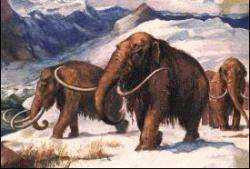
Scientists have completed the oldest mitochondrial genome sequence from the 33,000-year-old remains of a woolly mammoth; results show mammoths and Asian elephants are a sister species that diverged soon after their common ancestor split from the lineage of the African elephant.
Some 10,000 years after the last of their kind wandered the North American and Eurasian wilderness, woolly mammoths (Mammuthus primigenius) remain a fascinating subject of study for scientists, with implications for understanding the evolutionary origins of present day mammals. Mammoths and elephants belong to one of the most ancient mammalian groups and various recent studies have debated the genetic relationships between them. Now, scientists at the University of Massachusetts Medical School and the Russian Academy of Medical Sciences have weighed in on the issue, with results supported by the oldest mitochondrial genome sequence determined to date from the remains of a mammoth that died approximately 33,000 years ago.
In "Complete mitochondrial genome and phylogeny of Pleistocene mammoth Mammuthus primigenius," published in the February 7 issue of PLoS Biology, a publication of the Public Library of Science (PLoS), Evgeny I. Rogaev, PhD, a professor of psychiatry at UMass Medical School and professor of genetics at the Russian Academy of Medical Sciences, with colleagues from the Brudnick Neuropsychiatric Research Insitute at UMass Medical School, Russian Academy of Sciences, Moscow State University and the University of California-San Diego, report the sequence of the complete mitochondrial genome (16,842 base pairs) of a woolly mammoth extracted from permafrost-preserved remains from the Pleistocene epoch, a period of time usually dated from between 1.6-1.9 million to about 10,000 years before present. Their study demonstrates that the woolly mammoth and the Asian elephant are a sister species that diverged soon after their common ancestor split from the lineage of the African elephant.
Dr. Rogaev and colleagues used extracted DNA from segments of a woolly mammoth leg with intact muscle and skin tissue that was found in the Enmynveem River valley in northeastern Siberia in 1986 and radio-carbon dated to be between 33,750 and 31,950 years old. They found that the DNA extracted from the well preserved tissue, while degraded, was nevertheless of remarkable quality and quantity. Using polymerase chain reaction (PCR) techniques that allow for investigators to make a significant number of copies of a gene and thus create a template for sequencing, the scientists used different DNA extracts from the mammoth muscle tissue to reconstruct the complete mitochondrial genome in laboratories in Moscow in 2000, and independently, at UMass Medical School a few years later.
While DNA is present inside the nucleus of every cell of the body, DNA in the cell’s mitochondria offers investigators valuable information on evolutionary development. Distinct from nuclear DNA, mitochondrial DNA possesses its own genome of about 16,500 base pairs that exists outside of the cell nucleus. And whereas nuclear DNA undergoes the process of recombination, where sections of DNA from the mother and the father are mixed resulting in a more distorted genetic history, mitochondrial DNA, which is inherited only from the mother, allows for the tracing of a more direct genetic line.
Using the mitochondrial genome they had sequenced, Rogaev and his fellow scientists sought to uncover the evolutionary relationship between the extinct woolly mammoth and the Asian and African savanna elephants. Analysis of the creatures from the study of their biological form and structure have yielded conflicting results; for example, while dental characteristics suggest a closer relationship between the woolly mammoth and the Asian elephant, an examination of the structure of the trunk tip supports a grouping of the woolly mammoth with the African elephant.
To resolve this evolutionary mystery, Rogaev and colleagues sequenced complete mitochondrial genomes of the African and Asian elephants. Their subsequent analysis indicated that the woolly mammoth shared a common ancestor with the Asian elephant more recently than with the African elephant. This conclusion corroborates a paralleled and independent study of a younger mammoth (~12,000 years old) from the Max Planck Institute in Leipzig, Germany as reported in Nature in December 2005.
Because the modern populations of African and Asian elephants are quite highly diverse genetically, the investigators also sought to determine if the same was true of different woolly mammoths living through the Pleistocene. Interestingly, in comparing the mammoth mitochondrial genome sequence to the longest mitochondrial DNA sequences available from other individual mammoths, the authors of this study found that the mammoths were highly similar, suggesting a relatively low genetic diversity of mammoth maternal lineages in a population spanning vast territory in Northern Siberia. These preliminary results suggest that Siberia was occupied by a relatively homogeneous population of woolly mammoth throughout the late Pleistocene. The scientists hope that further sequencing of mitochondrial genomes of other mammoth specimens can clarify the diversity of the ancient mammoth population.
Although previous studies have shown that the problem with using ancient DNA in evolutionary studies is that DNA modifications can lead to artifact mutations accumulating in postmortem material and, therefore, produce errors in sequences; the strategies and data provided by Rogaev et al demonstrate that their long genomic sequence is essentially free from such artifacts and that the mammoth genome is authentic. Further, they have demonstrated that large DNA fragments can be isolated from ancient specimens recovered from permafrost conditions and that the complete genes can be directly cloned or reconstructed for animals that disappeared from the earth many thousand years ago.
“The reconstruction of an animal’s evolutionary history based on complete mitochondrial sequence analysis is a powerful method to determine the relationship between closely related extinct and extant species,” said Rogaev. “However, data from both mitochondrial and nuclear DNA may offer further information on the development of a species. Given the unique quality of some specimens from mammoths found in Siberia, nuclear DNA may potentially be recovered and used for further confirmation of the results of this study.”
Source: University of Massachusetts Medical School


