Mother's little helpers
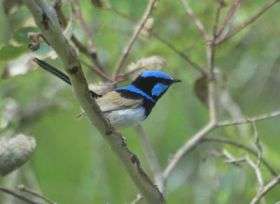
August 16, 2007 Superb Fairy-Wren

Malurus cyaneus. Credit: Please credit Dr. Rebecca Kilner

An Australian bird has been found to produce smaller, less nourishing eggs when it breeds in the presence of other ‘helper’ birds that provide child-care assistance. This unique adaptation enables the birds to live longer and breed more often than females without helpers. The research, led by a University of Cambridge academic, today made the front cover of Science.

In many animal species, parents caring for their offspring are assisted by so-called ‘helpers’, adults that forego reproduction to help others raise young. Although parents decrease the amount of food they provide to offspring when helpers are present, the additional supply provided by the helpers more than compensates for this reduction. As a result, chicks fed by parents and helpers tend to receive more than those raised without helpers.

However, research has shown that these offspring who receive additional food do not appear to gain any advantage as a result. This has raised the question of who really gains from helping behaviour – a question that has baffled scientists until now. Research reported today on a common Australian bird species has provided a novel answer.

Researchers have discovered that in the ‘superb fairy-wren’ (Malurus cyaneus), mothers benefit more from helping behaviour than their offspring. As helpers provide chicks with a significant amount of additional food, mothers can afford to skimp on nourishing their eggs. Females that are assisted by helpers were found to lay smaller eggs with disproportionately smaller yolks, thereby saving energy during egg laying. As a result, they live longer and breed more often than females with no helpers.

The scientists predict that this phenomenon occurs in other cooperative breeding bird species.

“Helper birds offer mothers a form of child-care”, says Dr Rebecca Kilner from the University of Cambridge’s Department of Zoology, one of the leaders of the research team that made this discovery. “In this species, mothers effectively steal the child-care from their current brood and spend this energy on producing more young in the future.”

Superb fairy-wrens sometimes breed as pairs, and sometimes as pairs assisted by between one and four helpers. Helpers are always male and often sons from previous breeding. Females are drab brown in colour, but males moult into a striking blue plumage to breed, hence the species’ superlative name.

Source: University of Cambridge


print this article email this article download pdf blog this article bookmark this article     Stumble it Digg this share on Facebook retweet share on Reddit add to delicious
Rate this story - 5 /5 (1 vote)


August 16, 2007 all stories

Comments: 0

5 /5 (1 vote)
  • Stumble this up

  • Digg this

  • share this

  • hide
  • Related Stories

  • A helping hand from the grandparents
    created Dec 21, 2007 | popularity not rated yet | comments 0
  • Savanna habitat drives birds, and perhaps others, to cooperative breeding
    created Aug 16, 2007 | popularity not rated yet | comments 0
  • Delayed breeding is not necessarily costly to lifetime reproductive success
    created Apr 05, 2007 | popularity not rated yet | comments 0
  • Study reveals why starling females cheat
    created Jun 20, 2007 | popularity not rated yet | comments 0
  • 'Wingman' -- how buddies help alpha males get the girl
    created Mar 05, 2007 | popularity not rated yet | comments 0


Other News

Iowa State University researcher discovers key to vital DNA, protein interaction

Researchers discover key to vital DNA, protein interaction

Biology / Other

created 55 minutes ago | popularity not rated yet | comments 0

(PhysOrg.com) -- A researcher at Iowa State University has discovered how a group of proteins from plant pathogenic bacteria interact with DNA in the plant cell, opening up the possibility for what the scientist ...


The bizarre lives of bone-eating worms

Biology / Plants & Animals

created 35 minutes ago | popularity not rated yet | comments 0

The females of the recently discovered Osedax marine worms feast on submerged bones via a complex relationship with symbiotic bacteria, and they are turning out to be far more diverse and widespread than scientists expected. ...


Researchers produce world’s first transgenic sweet sorghum

Biology / Biotechnology

created 1hour ago | popularity not rated yet | comments 0

(PhysOrg.com) -- UQ (University of Queensland) researchers are leading green energy technology with confirmation of the world’s first transgenic sweet sorghum plants.


Scientists successfully reprogram blood cells

Biology / Cell & Microbiology

created 5 hours ago | popularity 5 / 5 (1) | comments 0

Researchers have transplanted genetically modified hematopoietic stem cells into mice so that their developing red blood cells produce a critical lysosomal enzyme -preventing or reducing organ and central nervous system damage ...


New discovery allows scientists for the first time to experimentally annotate genomes

New discovery allows scientists for the first time to experimentally annotate genomes

Biology / Biotechnology

created 4 hours ago | popularity 5 / 5 (3) | comments 0

Over the last 20 years, the sequencing of the human genome, along with related organisms, has represented one of the largest scientific endeavors in the history of mankind. The information collected from genome ...