Chathams research challenges theory on New Zealand prehistory
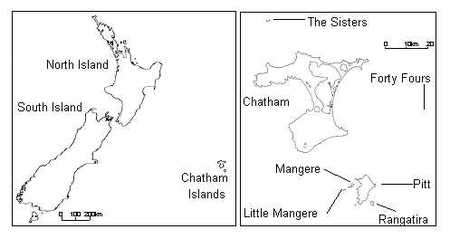
A combination of geological and biological findings are lending weight to the possibility that the Chatham Islands were under water until three million years ago, and that New Zealand’s flora and fauna may have evolved in another large island near New Zealand.
Traditional thinking is that the islands of New Zealand split from the ancient super-continent Gondwanaland about 85 million years ago, and stayed above the oceans since then.
This is challenged by the findings of the multidisciplinary project that has been researching the Chathams, named the Chatham Islands Emergent Ark Survey. The team of biologists and geologists includes Dr Steve Trewick, Senior Lecturer at the Allan Wilson Centre for Molecular Ecology and Evolution. Dr Trewick was part of a team who visited the islands in 2004.
Findings include identification of remnants of deepwater limestone from about three million years ago, overlaid by beach deposits of sand, indicating that the Chathams may be much younger than previously thought. A further significant discovery was the previously unmapped formation in the southwest corner of the Chathams, volcanic rocks of a type that erupted and accumulated on the seashore. By using fossils from within the rocks and radiometric ageing, researchers found the formation was deposited between 2.5 million and 4.5 million years ago. The rocks were originally on the seabed, but now form the highest point on the Chathams, indicating that the entire land area was under the sea until uplift about two million years ago raised it to above the water level.
Biological findings now coming to hand are compatible with the geological findings, indicating that Chatham Islands birds and plants have been separated from their New Zealand relatives for up to three million years.
The final report on the Marsden-funded project is due next year. Participants include staff from Otago, Lincoln and Massey universities and GNS Science.
Source: Massey University


