Gene triggers obsessive compulsive disorder-like syndrome in mice
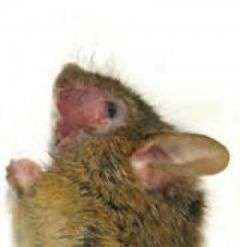
Using genetic engineering, researchers have created an obsessive-compulsive disorder (OCD) - like set of behaviors in mice and reversed them with antidepressants and genetic targeting of a key brain circuit. The study, by National Institutes of Health (NIH) -funded researchers, suggests new strategies for treating the disorder.
Researchers bred mice without a specific gene, and found defects in a brain circuit previously implicated in OCD. Much like people with a form of OCD, the mice engaged in compulsive grooming, which led to bald patches with open sores on their heads. They also exhibited anxiety-like behaviors. When the missing gene was reinserted into the circuit, both the behaviors and the defects were largely prevented.
The gene, SAPAP3, makes a protein that helps brain cells communicate via the glutamate chemical messenger system.
“Since this is the first study to directly link OCD-like behaviors to abnormalities in the glutamate system in a specific brain circuit, it may lead to new targets for drug development,” explained Guoping Feng, Ph.D., Duke University, whose study was funded in part by the National Institute of Neurological Disorders and Stroke (NINDS), the National Institute of Mental Health, and the National Institute of Environmental Health Sciences (NIEHS). “An imbalance in SAPAP3 gene-related circuitry could help explain OCD.”
Feng, Jeffrey Welch, Ph.D., Jing Lu, Ph.D., William Wetsel, Ph.D., Nicole Calakos, M.D., Ph.D., and colleagues report on their discovery in the August 23, 2007, issue of Nature.
“This serendipitous discovery illustrates how pursuit of basic science questions can provide important insights with promising clinical implications into poorly understood diseases,” said NINDS director Story C. Landis, Ph.D.
“Ultimately, the challenge will be to translate what we learn from this stunning new genetic animal model into help for the 2.2 million American adults haunted by unwanted thoughts and repetitive behaviors,” added NIMH director Thomas R. Insel, M.D., who conducted clinical studies on OCD earlier in his career.
Previous studies of OCD had implicated a circuit in which the striatum, which straddles the middle of the brain, processes decisions by the cortex, the executive hub at the front of the brain. But exactly how circuit communications might go awry remained a mystery, and glutamate was not a prime suspect.
Nor were Feng and colleagues initially interested in OCD. Rather, they sought to understand the function of the protein made by the SAPAP3 gene, which is involved in glutamate-mediated communications in the cortex-striatum circuit. To find out how it worked, they used genetic engineering to generate SAPAP3 knockout mice.
The mice seemed normal at first, but after four to six months, all developed telltale bald patches of raw flesh on their faces, caused by compulsive scratching. Videotapes confirmed that the sores were self-inflicted – grooming behavior gone amok.
“We were surprised by the magnitude of this phenomenon,” recalled Feng. “The parallels with OCD were pretty striking.”
In a series of behavioral tests, his team determined that the SAPAP3 knockout mice also showed anxiety-like behaviors, often associated with OCD. They were slower to venture into – and quicker to exit – risky environments. And like their human counterparts, the animals responded to treatment with a serotonin selective reuptake inhibitor (fluoxetine), which reduced both the excessive grooming and anxiety-like behaviors.
SAPAP3 is the only member of a glutamate-regulating family of proteins that is present in large amounts in the striatum. It is part of the machinery at the receiving end of the connections between brain cells, where the neurotransmitter binds to receptors, triggering increased activity among the cells.
The researchers found that lack of SAPAP3 genes dampened the increased activity usually caused by glutamate and stunted the development and functioning of circuit connections.
When the researchers injected the striatum of seven-day-old knockout mice with a probe containing the SAPAP3 gene, it protected them from developing the OCD and anxiety-like behaviors 4 to 6 months later and corrected the circuit dysfunction. This confirmed that the absence of the SAPAP3 gene in the striatum was indeed responsible for the OCD-like effects.
The findings suggest that anxiety-related behavior may stem from the striatum, which serves as a pivotal link between the cortex and emotion hubs. The researchers note that recent genetic studies of OCD have hinted at involvement of glutamate-related mechanisms.
Feng’s team is also looking beyond the SAPAP3 gene to other related genes in the circuit that could lead to similar behavioral problems. They are exploring how the SAPAP3 gene affects neural communications and how it works at the molecular level – with an eye to possible applications in drug development. Collaborating clinical investigators are exploring whether specific variants of the SAPAP3 gene in humans may be related to OCD spectrum disorders, such as trichotillomania, or obsessive hair pulling – a human syndrome also characterized by bald patches on the head.
Source: National Institute of Neurological Disorders and Stroke


