Climate change goes underground
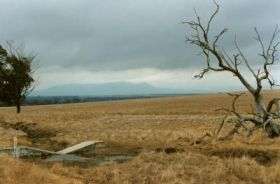
Climate change, a recent “hot topic” when studying the atmosphere, oceans, and Earth’s surface; however, the study of another important factor to this global phenomenon is still very much “underground.” Few scientists are looking deep enough to see the possible effects of climate change on groundwater systems. Little is known about how soil, subsurface waters, and groundwater are responding to climate change.
Scientists with CSIRO Australia and USDA’s Agricultural Research Service (ARS) have addressed the vital need for the prediction of climate change impacts on water below the ground. They report that the only way to make such predictions is with simulated interactions between soils and plants that are essential in determining sensitivities of soil-water-vegetation systems to climate change.
In their recent research, they generated daily weather patterns that match historical records and predicted climates with double the carbon dioxide using a General Circulation Model (GCM) of the atmosphere. The daily weather that resulted was entered into a soil-water-vegetation model that represented soil absorbed water, water flow, and storage in soil, surface evaporation, plant uptake, transpiration of water, and deep drainage below the roots of trees and grasses that becomes groundwater recharge.
Results of this research are published in the August 2007 Vadose Zone Journal in a special section titled, “Groundwater Resources Assessment under the Pressures of Humanity and Climate Change.” The eight-articles in this special section are available as open-access for a limited time. This special section was edited by Timothy Green (USDA-ARS), Makoto Taniguchi (Research Institute for Humanity and Nature, Japan), and Henk Kooi (Vrije University, The Netherlands) includes studies of several locations around the world, including regions of Africa, Asia, Australia, Micronesia, North America, and Europe.
The simulation models showed that changes in the temperatures and rainfall affected growth rates and leaf size of plants which impacts groundwater recharge. In some areas, the vegetation response to climate change would cause the average recharge to decrease, but in other areas, recharge to groundwater would more than double.
According to the authors, the outcome of this research is vital to land and water management agencies and policy makers all over the world. When the likely scenario of the Earth’s atmosphere doubling its concentration of carbon dioxide becomes a reality, this study indicates that groundwater recharge may increase dramatically in some areas as the changes in rainfall are amplified by the soil-water-plant systems that control groundwater recharge. Regardless of whether such a response is viewed as a benefit or liability, the potential magnitude of change presents strong motivation to gain knowledge of these systems and improve our predictions and responses.
In many countries, the groundwater reservoirs contribute a large part of the total water supply. It is especially true for Denmark, where 99% of the water supply depends on groundwater. This is why Scientists at the University of Copenhagen and the Geological Survey of Denmark and Greenland (GEUS) investigated the effects of future climate change on groundwater recharge, storage, and discharge to streams for two geologically and climatologically different regions in Denmark in a study funded by the Danish Environmental Protection Agency. These results are also published in the special section of Vadose Zone Journal.
The climate data used in this study was gathered from regional climate simulations for two scenarios of the Intergovernmental Panel on Climate Change for the period of 2071-2100. Average annual precipitation, temperature, and loss of water in the soil increased, but clear seasonal variations occurred. A model was used to simulate the altered water system that resulted from changes in weather conditions. As most groundwater systems react slowly to changes that occur on the earth’s surface, the main focus of this study was the average monthly values for a 15-year period.
The magnitude of the water response to the simulated climate change was highly dependant on the geological setting. In the study area characterized by sandy top soils and large, interconnected aquifers, the groundwater levels rose significantly. For the other study, with low-permeable top soils and thick clay layers, the groundwater levels only showed minor changes. The primary effect in this area was the change in river discharge with up to 50% increase in winter and 50% decrease in summer. Research is ongoing at the University of Copenhagen and GEUS to investigate other combined impacts of changes in climate, land use, irrigation demand, and sea-level on water resources.
According to the guest editors, resource management and government policies will need to be assessed based on both surface and underground climate impacts altered by human activity. According to Timothy Green, one of the guest editors, the simulations in these studies help to explain the complex interactions between climate on plants and soils. For full adaptation as part of the Earth’s water security discussions, he recommends that underground climate change needs to surface as a full-fledged part of the global system.
Source: Soil Science Society of America


