Exploding Lunar Eclipse
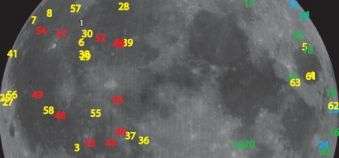
Most people appreciate lunar eclipses for their silent midnight beauty. NASA astronomer Bill Cooke is different: he loves the explosions.
On Tuesday morning, Aug. 28th, Earth's shadow will settle across the Moon for a 90-minute total eclipse. In the midst of the lunar darkness, Cooke hopes to record some flashes of light--explosions caused by meteoroids crashing into the Moon and blasting themselves to smithereens.
"The eclipse is a great time to look," says Cooke, who heads up NASA's Meteoroid Environment Office (MEO) at the Marshall Space Flight Center. The entire face of the Moon will be in shadow for more than two hours, offering more than 7 million sq. miles of dark terrain as target for incoming meteoroids.
Lunar explosions are nothing new. Cooke's team has been monitoring the Moon since late 2005 and they've recorded 62 impacts so far. "Meteoroids that hit Earth disintegrate in the atmosphere, producing a harmless streak of light. But the Moon has no atmosphere, so 'lunar meteors' plunge into the ground," he says. Typical strikes release as much energy as 100 kg of TNT, gouging craters several meters wide and producing bursts of light bright enough to be seen 240,000 miles away on Earth through ordinary backyard telescopes.
"About half of the impacts we see come from regular meteor showers like the Perseids and Leonids," says MEO team-member Danielle Moser. "The other half are 'sporadic' meteors associated with no particular asteroid or comet."
The MEO observatory is located on the grounds of the Marshall Space Flight Center in Huntsville, Alabama, and consists of two 14-inch telescopes equipped with sensitive low-light video cameras. Moser and colleague Victoria Coffey will be on duty Tuesday morning.
During the eclipse, they hope to catch an elusive variety of meteor called Helions.
"Helion meteoroids come from the direction of the sun," Cooke says, "and that makes them very difficult to observe." They streak across the sky most often around local noon when the sun's glare is too intense for meteor watching.
Wait a minute. Meteors from the sun? "The sun itself is not the source," he explains. "We believe Helion meteoroids come from ancient sungrazing comets that laid down trails of dusty debris in the vicinity of the sun."
No one can be certain, however, because Helion meteoroids are so devilishly difficult to study. Astronomers see them only in small numbers briefly before dawn or after sunset. Attempts to study Helions via radar during the day have been foiled, to a degree, by terrestrial radio interference and natural radio bursts from the sun—both of which can drown out meteoroid "pings."
Enter the eclipse.
During the eclipse, the Man in the Moon (the face we see from Earth) will be turned squarely toward the sun—"perfect geometry for intercepting Helion meteoroids," says Moser. "And with Earth's shadow providing some darkness, we should be able to see any explosions quite clearly."
"Watching Helion meteoroids hit the Moon and studying the flashes will tell us more about their size, velocity and penetration," she adds. That, in turn, will further the MEO's goal of estimating meteoroid hazards to spacecraft and future Moon-walking astronauts.
No one has ever seen a lunar impact during an eclipse, "but there's a first time for everything," Cooke says.
Source: Science@NASA, by Dr. Tony Phillips


