Bee researchers close in on Colony Collapse Disorder
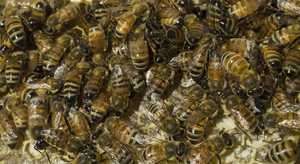
Across the nation, beekeepers have seen hive after hive succumb to Colony Collapse Disorder (CCD); a team of entomologists and infectious disease researchers now report a strong correlation between the occupancy of CCD and a virus, Israeli Acute Paralysis Virus (IVAP).
"We have not proven a causal relationship between any infectious agent and CCD," the researchers report in today's (Sept. 6) issue of Science Express online. However, they note that the prevalence of IAPV genetic material in bees suffering from CCD, the timing of the outbreaks and the geographical circumstances "indicate that IAPV is a significant marker for CCD."
Many researchers are investigating CCD because domestic honeybees are vital to a variety of agricultural crops in the United States. Beekeepers truck their hives cross country to pollinate almond groves in California, field crops and forages in the Midwest, apples and blueberries in the Northeast and citrus in Florida.
Unlike other diseases that have plagued bees in the past, CCD leaves a hive with a few newly hatched adults, a queen and plenty of food. Researchers suspect a pathogen because while bees will not recolonize a CCD hive, once the hive is irradiated and therefore sterile, bees are happy to live there.
The disease was recognized in 2006, but beekeepers reported hive declines similar to CCD as early as 2004. An estimated 23 percent of all beekeeping operations in the U.S. suffered from CCD during the winter of 2006-2007.
After looking at other methods of identifying the cause of the disease, the researchers decided to sequence the genetic material in bees to try to find a potential pathogen.
"The genome of the honey bee had just been completed," said Diana Cox-Foster, professor of entomology, Penn State. "So it was possible to do the sequencing and then eliminate the genetic material of the bees."
W. Ian Lipkin, M.D., professor of epidemiology, neurology and pathology at Columbia University and director of the Center for Infection and Immunity at Columbia University Mailman School of Public Health, and his team prepared samples for 454 Life Science -- the company that developed the array-based pyrosequencer -- to sequence cDNA from the RNA of the bees.
Researchers analyzed data using a unique set of algorithms generated at Columbia, did a large amount of viral sequence comparison, developed real time PCR assays and cloned the full length IAPV genome, among other things.
The samples sequenced included bees from four geographically separated CCD suffering operations, apparently healthy bees imported from Australia, non-diseased samples from Pennsylvania and Hawaii, and samples of royal jelly imported from China. Royal jelly is secreted by bees and used to feed all larvae, but those fed only with royal jelly become queens.
"We chose bees from Hawaii because at that time, those populations were free of varoa mites, a problem in all mainland hives," says Cox-Foster. "The royal jelly was not intended for bees, but for human consumption and cosmetics, but some beekeepers use it to create new queens."
The researchers grouped material for sequencing as presumed CCD positive, presumed CCD negative and royal jelly. The pooled RNA sequences were analyzed for bacteria, fungi, parasites and viruses matches.
Lipkin played a key role in the search for new or reemerging pathogens, contributing unique methods. The genetic sequences, minus that of the domestic honeybee, were eventually matched against GenBank, a database of genetic sequences maintained by the U.S. National Center for Biology Information, National Institutes of Health. Ninety-six percent of the genetic material matched that previously found in bees.
The bacterial sequences were those normally found in bees worldwide, analyzed by Nancy A. Moran, the Regents' professor of ecology and evolutionary biology, University of Arizona, and colleagues and Jay Evans, research entomologist, Bee Research Laboratory, U.S. Department of Agriculture, Agricultural Research Service and colleagues.
"The bacteria found were the same as those found in two previous studies from two different parts of the world at two different times," says Cox-Foster. "They represent mutualistic or symbiotic relationships with the bees, similar to those of humans and the bacteria found in the human gut."
Protozoans and fungi analyzed by Liwang Cui, associate professor of entomology, and David M. Geiser, associate professor of plant pathology, Penn State respectively, were associated with both CCD and non CCD populations.
"We knew before we started that we would find a boatload of viruses in the bees given our preliminary research," says Cox-Foster. "Eighteen different types are known from serology and antibody work in England."
Cox-Foster's and Lipkin's groups analyzed the viruses. They found the expected viruses, and they found one that, while identified by researchers at Hebrew University in 2004, has just now appeared in scientific publication. This virus, IAPV, along with Kashmir bee virus (KBV), was found only in CCD populations. In the initial experiments, the researchers report that "IAPV was found in all four affected operations sampled, in two of four royal jelly samples and in the Australian sample. KBV was present in three of four CCD operations, but not in the royal jelly."
Other viruses and Nosema parasites had been suggested as the cause of CCD, but the researchers found that those pathogens appear in both CCD and non-CCD samples. Only KBV and IAPV correlated with CCD in the genetic survey. In a recently published study, Jeffery S. Pettis, research leader, Bee Reseach Laboratory, and colleagues reported that Nosema ceranae had been in the U.S. for at least 10 years, along with Nosema apis.
Researchers then analyzed samples collected from 30 CCD colonies and 21 healthy colonies in the past three years for four pathogens: KBV, IAPV and Nosema apis and Nosema ceranae -- both fungi that infect bees. They found that all samples that had IAPV had KBV, but KBV also occurred in both sick and healthy samples.
"IAPV was found to increase the risk of CCD with a trend for increased CCD risk in samples positive for Nosema apis," the researchers said. "Neither KBV nor N. ceranae contributed significantly to the risk for CCD nor did they alter the influence of IAPV on CCD."
However, while IAPV may be a marker for CCD, proving that any
organism is the cause of CCD is somewhat more difficult. The researchers will now try to infect bee colonies with CCD. Beside general health stress from the heavy load of pathogens normally carried by bees, other suggested contributors to CCD include pesticides, drought and nutritional stress.
Timing also may be the key to pinpointing the cause. The United States began allowing importation of bees from Australia in 2004, which coincides with early reports of CCD. The same year, IAPV, described by Israeli researchers with symptoms of shivering wings, progressed paralysis and bees dying outside the hive appeared. While CCD does not seem to have the same symptoms, this may reflect a different strain of the virus, co-infection with another pathogen or the presence of other stressors.
The researchers note that "the varroa mite, for example, absent in Australia, immunosuppresses bees, making them more susceptible to infection by other organisms." Beekeepers used mitocides, chemicals used to control varroa, on both CCD and healthy colonies.
Edward C. Holmes, professor of biology, Penn State, and Gustavo Palacios, Columbia University, were instrumental in determining the evolutionary relationships of the viruses found in CCD colonies compared to previously known viruses and isolates from Australia.
While unquestionably it is important to identify the cause of CCD, this total genetic study of bees and their fellow travelers also may lead to a better understanding of other disease causing agents in the population and to an understanding of the beneficial organisms that reside within the bee.
Source: Penn State


