Females promiscuous for the good of their grandchildren
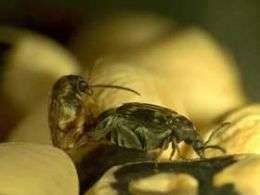
Female animals that mate with multiple partners may be doing so to ensure the optimum health of their grandchildren, according to researchers at the universities of Leeds and Exeter.
Despite mating being a risky business for females – not least with the threat of injury, sexually transmitted diseases and vulnerability to predators - polyandry (females taking multiple mates) is widespread in the animal kingdom.
Dr Stephen Cornell (Leeds) and Dr Tom Tregenza (Exeter) have shown that polyandry may have evolved as a survival technique because it provides genetic benefits for species that either accidentally inbreed, or may have no other choice in certain circumstances.
The researchers used a mathematical model to calculate the genetic advantages of polyandry for species where inbreeding is routine – which is thought to be a very large number of species and includes social spiders and many pests of stored food such as beetles. They found that the genetic rewards are likely to be strong enough to compensate for the risks involved in taking extra mates.
“Not only is mating dangerous enough for females, but most species covered by our model should be able to get all the sperm they need for a lifetime’s reproduction from a single mating, so it has puzzled scientists as to why this type of behaviour would be so common,” says Dr Cornell. “You would think that their time would be better spent foraging for food, or at least avoiding being eaten by predators.”
In some polyandrous animals, ‘paternity biasing’ may take place where the female
will use only the sperm from the ‘preferred’ male to fertilise her eggs, or invest her time looking after the offspring of her preferred mate.
But many species are not cabable of preferentially fertilizing their eggs and so must have a different reason for their behaviour. For these species, mating with multiple partners means that the female’s offspring are only half-siblings, so that when inbreeding occurs the gene pool is wider, which reduces the chances of genetic defects appearing.
“It’s common for animals to breed with siblings if no other suitable mates can be found, says Dr Cornell, “For example, female bruchid beetles – a major pest in Africa that infest stores of dried beans - move on after mating to inhabit a new patch of food, and in the new colony inbreeding may be inevitable until new beetles arrive.”
Says Dr Tregenza: “It’s well known that male animals mate with multiple females to sire as many descendants as possible. But females are playing a very different game. They are normally expected to focus on quality, rather than quantity of mates. It’s all about weighing up the costs of additional mates and in many species the benefits outweigh the risks in ensuring the genetic line is continued.”
Source: University of Leeds


