Study reveals predation-evolution link
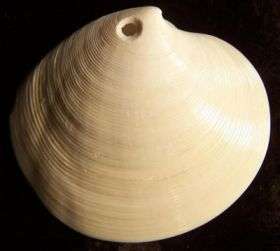
The fossil record seems to indicate that the diversity of marine creatures increased and decreased over hundreds of millions of years in step with predator-prey encounters, Virginia Tech geoscientists report in the Proceedings of the National Academy of Science.
For decades, there has been a debate between paleontologists, biologists, and ecologists on the role of ecological interactions, such as predation, in the long term patterns of animal evolution.
John Warren Huntley, a postdoctoral scientist in the Department of Geosciences at Virginia Tech, and Geosciences Professor Micha³ Kowalewski decided to look at the importance of ecology by surveying the literature for incidents of predation in marine invertebrates, such as clams and their relatives.
“Today, certain predators leave easy to identify marks on the shells of their prey, such as clean, round holes,” said Huntley. “Such holes drilled by predators can also be found in fossil shells.”
The researchers also looked for repair scars on the shells of creatures that survived an attack.
The study was conducted by looking at studies which reported the frequency of drill holes and repair scars in fossil species from the last 550 million years.
First Huntley and Kowalewski found that predation increased notably about 480 million years ago, some 50 million years earlier than previous studies have found. “The earlier studies were based on changes in morphology – predators with stronger claws and jaws and prey with more ornamented shells. We looked at the frequency of attacks, which increased about 50 million years before the changes in armor,” said Huntley.
But the most notable discovery is the observation that the incidence of drill holes and repair scars are strikingly parallel to Sepkoski’s diversity curve for marine invertebrates. This diversity curve, compiled by the late Jack Sepkoski of the University of Chicago, records the origination and extinction of marine animal genera through the last 540 million years (Phanerozoic). “There is a strong correlation between predation intensity and global marine biodiversity in the Phanerozoic,” Huntley said.
In their article, “Strong Coupling of Predation Intensity and Diversity in the Phanerozoic Fossil Record,” the researchers offer three rival hypotheses to explain the correlation. “It’s the classic problem with interpreting a correlation,” said Huntley “you have to be careful when ascribing a cause. Let’s say factors X and Y are correlated. A change in X could cause a change in Y, a change in Y could cause a change in X, or X and Y could both be controlled by another factor.”
The first hypothesis is that predation intensity could be driving diversity. “In this case, ecological interactions would matter in evolution,” said Huntley. “Organisms evolve over the long term in response to their enemies, and with increased predation intensity more species evolve.”
The second hypothesis is that as biodiversity increased, by chance predators with more complex feeding strategies evolved. “Predatory techniques like drilling and peeling shells are more evolutionarily-derived than more primitive forms of predation like whole ingestion. In this scenario you would expect to evolve sophisticated forms of predation only when diversity is high,” said Huntley.
And the third hypothesis is that something else is driving both predation and biodiversity. “Some periods have more sedimentary rocks, and therefore more fossils, preserved than others,” said Huntley. “There is less diversity to be observed when there are fewer fossils to study. Perhaps this sampling bias affects our ability to find samples with high predation intensities as well.”
“Now we will try to pick this apart,” said Huntley. “We can test these hypotheses by examining relevant linkages between predation intensity and diversity in modern oceanic environments. Also, understanding the true nature of Sepkoski’s curve will help us interpret our findings. Is it biological? Is it the product of uneven sampling?”
Source: Virginia Tech


