Who's afraid of the big, bad wolf? Coyotes
September 11, 2007 Who's afraid of the big, bad wolf? Coyotes

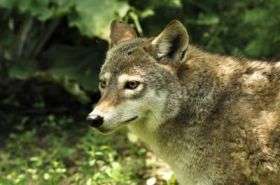
Coyote densities are lower when wolves are present. Credit: Julie Larsen Maher/Wildlife Conservation Society

While the wily coyote reigns as top dog in much of the country, it leads a nervous existence wherever it coexists with its larger relative, the wolf, according to a new study from the Wildlife Conservation Society. In fact, coyote densities are more than 30 percent lower in areas that they share with wolves.

The paper, which appears in the most recent edition of the Journal of Animal Ecology, details the results of a study examining the effects of wolves on the distribution and abundance of coyotes in those areas.

“The study tests the hitherto unproven hypothesis that wolves limit the range and numbers of coyotes in places where the two species compete with one another,” said Dr. Kim Murray Berger, a WCS researcher and lead author of the study. “In this instance, the findings do support the theory, but coyotes can hold their own against wolves by living in packs.”

Working in Grand Teton National Park in the southern Greater Yellowstone Ecosystem, researchers followed radio-collared coyotes at wolf-abundant and wolf-free locations. They found that while coyotes remained the numerically dominant predator in locations where wolves exist, the densities of coyotes was substantially lower in areas containing both canid species. Specifically, coyote densities were 33 percent lower in wolf-abundant sites in the Tetons. Similarly, coyote densities declined 39 percent in Yellowstone National Park after wolves were recently reintroduced there.

In terms of direct mortality, actual predation of wolves on coyotes was low, accounting for some 16 percent of the radio-collared animals. Also there was a clear indication that, with coyotes, there’s safety in numbers; transient coyotes without packs were more likely to fall prey to wolves, with 56 percent of transient coyote mortality being attributable to wolves. Also, transient coyotes in wolf-abundant sites were 117 percent more likely to leave an area frequented by wolves.

A bigger threat to coyotes than wolves is humans, with 29 percent of the mortality in the study animals being human-related.

Source: Wildlife Conservation Society


print this article email this article download pdf blog this article bookmark this article     Stumble it Digg this share on Facebook retweet share on Reddit add to delicious
Rate this story - 4.4 /5 (5 votes)


September 11, 2007 all stories

Comments: 0

4.4 /5 (5 votes)
  • Stumble this up

  • Digg this

  • share this

  • hide
  • Related Stories

  • New clues to the Falklands wolf mystery
    created Nov 02, 2009 | popularity not rated yet | comments 0
  • Are wolves the pronghorn's best friend?
    created Mar 03, 2008 | popularity not rated yet | comments 0
  • Loss of top predators causing surge in smaller predators, ecosystem collapse
    created Oct 01, 2009 | popularity not rated yet | comments 0
  • Black wolves: The first genetically modified predators?
    created Feb 05, 2009 | popularity not rated yet | comments 0
  • Scientists examine effect of wolves' absence and see an ecosystem 'unraveling'
    created Jan 29, 2009 | popularity not rated yet | comments 0


Other News

Iowa State University researcher discovers key to vital DNA, protein interaction

Researchers discover key to vital DNA, protein interaction

Biology / Other

created 4 hours ago | popularity not rated yet | comments 0

(PhysOrg.com) -- A researcher at Iowa State University has discovered how a group of proteins from plant pathogenic bacteria interact with DNA in the plant cell, opening up the possibility for what the scientist ...


Scientists successfully reprogram blood cells

Biology / Cell & Microbiology

created 8 hours ago | popularity 5 / 5 (2) | comments 0

Researchers have transplanted genetically modified hematopoietic stem cells into mice so that their developing red blood cells produce a critical lysosomal enzyme -preventing or reducing organ and central nervous system damage ...


UK starts study on using human DNA in animals

Biology / Biotechnology

created 5 hours ago | popularity not rated yet | comments 0

(AP) -- British scientists begin a new study on Tuesday to consider how human DNA is used in animal experiments and to determine what the boundaries of such controversial science might be.


Study shows that some malignant tumors can be shut down after all

Biology / Cell & Microbiology

created 12 hours ago | popularity 5 / 5 (3) | comments 1

Oncologists have had their hands tied because more than half of all human cancers have mutations that disable a protein called p53. As a critical anti-cancer watchdog, p53 masterminds several cancer-fighting operations within ...


The bizarre lives of bone-eating worms

Biology / Plants & Animals

created 4 hours ago | popularity 4 / 5 (1) | comments 0

The females of the recently discovered Osedax marine worms feast on submerged bones via a complex relationship with symbiotic bacteria, and they are turning out to be far more diverse and widespread than scientists expected. ...