Boys have biological reason to be troublesome
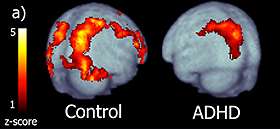
A team of researchers working with UQ's Queensland Brain Institute (QBI) has discovered more compelling evidence that attention-deficit disorder in young boys is substantially attributable to brain development.
UQ neuroscientist, Dr Ross Cunnington said there appeared to be a biological difference in young boys that made them more susceptible to attention deficit hyperactivity disorder, combined type (ADHD-CT).
“ADHD affects about three-to-five per cent of primary school aged children,” Dr Cunnington said.
“It is the most common neurodevelopmental disorder in children and causes significant delay in educational and social development.”
In a study of boys aged eight-to-twelve, Dr Cunnington and a team of scientists from The University of Queensland and research centres in Victoria used functional magnetic resonance imaging (fMRI) to map the brain activity of each of the boys as they performed a mental rotation task.
The study focused on imaging the parietal lobe, a region of the brain known to become active when something distracts a person from performing or completing a given task.
“We're looking at the interaction that occurs in the brain between the pre-frontal and parietal lobes,” Dr Cunnington said.
“Interactions between these brain areas are crucial for maintaining and focusing attention.
“ADHD can be a problem for young boys because it means they don't do well at school, and there are often serious social consequences as well.
“Severe ADHD could at times lead to a young person becoming alienated from their friends and classmates – which can lead to low self-esteem and further disruptive behaviour.
“Overall, there is strengthening evidence that ADHD has a biological cause. It's not all bad parenting.”
The good news for parents is that most cases of ADHD reduce with age and there are already several effective therapeutic treatments which help control the condition's symptoms.
The Cunnington group's research "Right parietal dysfunction in children with attention deficit hyperactivity disorder, combined type: a functional MRI study" was published in a recent edition of Molecular Psychiatry.
Dr Cunnington established his laboratory at The University of Queensland in January 2007, where he is a Principal Research Fellow and works jointly in the School of Psychology and the Queensland Brain Institute.
Source: University of Queensland


