Neuroscientists connect neural activity and blood flow in new brain stimulation technique
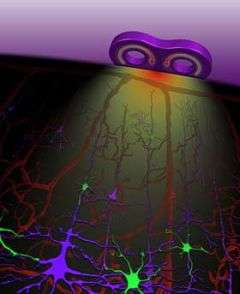
Neuroscientists at the University of California, Berkeley, have for the first time measured the electrical activity of nerve cells and correlated it to changes in blood flow in response to transcranial magnetic stimulation (TMS), a noninvasive method to stimulate neurons in the brain.
Their findings, reported in the Sept. 28 issue of the journal Science, could substantially improve the effectiveness of brain stimulation as a therapeutic and research tool.
With technological advances over the past decade, TMS has emerged as a promising new tool in neuroscience to treat various clinical disorders, including depression, and to help researchers better understand how the brain functions and is organized.
TMS works by generating magnetic pulses via a wire coil placed on top of the scalp. The pulses pass harmlessly through the skull and induce short, weak electrical currents that alter neural activity. Yet the relative scarcity of data describing the basic effects of TMS, and the uncertainty in how the method achieves its effects, prompted the researchers to conduct their own study.
"There are potentially limitless applications in both the treatment of clinical disorders as well as in fundamental research in neuroscience," said Elena Allen, a graduate student at UC Berkeley's Helen Wills Neuroscience Institute (HWNI) and co-lead author of the study. "For example, TMS could be used to help determine what parts of the brain are used in object recognition or speech comprehension. However, to develop effective applications of TMS, it is first necessary to determine basic information about how the technique works."
Other techniques for studying neural activity in humans, such as functional magnetic resonance imaging (fMRI) or electroencephalogram (EEG), only measure ongoing activity. TMS, on the other hand, offers the opportunity to non-invasively and reversibly manipulate neural activity in a specific brain area.
In a set of experiments, the researchers used TMS to generate weak, electrical currents in the brain with quick 2- to 4-second bursts of magnetic pulses to the visual cortex of cats. Direct measurements of the electrical discharge of nerve cells in the region in response to the pulses revealed that TMS predictably caused an initial flurry of neural activity, significantly increasing cell firing rates. This increased activity lasted 30 to 60 seconds, followed by a relatively lengthy 5 to 10 minutes of decreased activity.
What the researchers were able to determine for the first time was that the neural response to TMS correlated directly to changes in blood flow to the region. Using oxygen sensors and optical imaging, the researchers found that an initial increase in blood flow was followed by a longer period of decreased activity after the magnetic pulses were applied.
"This long-lasting suppression of activity was surprising," said Brian Pasley, a graduate student at HWNI and co-lead author of the study. "We're still trying to understand the physiological mechanisms underlying this effect, but it has implications for how TMS could be used in clinical applications."
The critical confirmation of the connection between blood flow and neural activity means that researchers can use TMS to alter neural activity, and then use fMRI, which tracks blood flow changes, to assess how the nerve cells respond over time.
"One of the most exciting applications of TMS is the ability to non-invasively modify neural activity in specific ways," said Pasley. "The brain is malleable, so brain stimulation may be used to alter and promote specific functions, like learning and memory, or suppress abnormal activity that underlies neurological disorders. If we can figure out the right ways to stimulate the brain, TMS will likely be useful in attempts to improve neural function."
The researchers noted that one of the difficulties in using TMS for specific applications is the fact that its effects vary in different brain regions and individuals.
"Using TMS is inherently challenging because its neural effects can be so variable," said Ralph Freeman, UC Berkeley professor of vision science and optometry and principal investigator of the study. "Fortunately, we can determine empirically what the end result is by making measurements with fMRI. This should be valuable to clinicians who must evaluate the effectiveness of a stimulation treatment. In turn, fMRI may serve as a guide to determine adjustments in treatment parameters."
The study was also co-authored by Thang Duong, a UC Berkeley graduate student in vision science. The National Eye Institute of the National Institutes of Health and the National Science Foundation helped support this research.
Source: UC Berkeley


