Good Vibrations: Using Terahertz Radiation to Control Material Properties
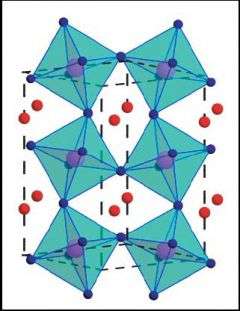
A collaboration led by researchers with the U.S. Department of Energy’s Lawrence Berkeley National Laboratory has used molecular vibrations, triggered by ultrafast pulses of terahertz radiation, to change a manganite crystal from an electrical insulator into a conductor. The ability to induce dramatic phase-changes in solid materials through select vibrations holds great promise for future exploitation of prized technological phenomena such as superconductivity and magnetoresistance.
“We have shown how macroscopic properties of a solid material, in this case, electrical resistance, can be controlled on ultrafast timescales through the coherent deformation of the material’s crystal structure,” said Matteo Rini, physicist and post-doctoral fellow in the research group of Robert Schoenlein with Berkeley Lab’s Materials Sciences Division, and lead author of a paper on this research that recently appeared in the journal Nature. “Our results present a new way of studying electron correlation effects and the coupling between crystal structure and the conduction properties of strongly correlated electrons.”
Electrons are said to be “correlated” when the activity of one has an influence on its neighbors. In materials that are strongly correlated, even a subtle alteration of electronic activity can have an enormous impact on electrical and magnetic properties. For example, in the presence of a magnetic field, some strongly correlated materials will increase electrical resistance by orders of magnitude, a phenomenon known as colossal magnetoresistance or CMR. Today’s electronics industry is largely based on semiconductors that, under ordinary conditions, are weakly correlated. If the processing and control that is routinely achieved with these semiconductors could be achieved with strongly correlated materials, it could open up a broad range of remarkable new technological possibilities.
Rini, working under Schoenlein and with a group of collaborators that included Ra’anan Tobey, Nicky Dean, Jiro Itatani, Yasuhide Tomioka, Yoshinori Tokura and Andrea Cavalleri, flashed single crystals of the strongly correlated manganite with femtosecond pulses of terahertz (trillion-cycles-per-second) radiation. Terahertz (abbreviated THz) radiation is the frequency of molecular vibrations; the femtosecond (millionths of a billionth of a second) timescale is the measure of atoms in motion.
Rini, Schoenlein and their colleagues found that a frequency of about 17 THz set off vibrations in the manganite crystal which resulted in a stretching of the electronic bonds that connect its principal constituent atoms - manganese and oxygen. This mild distortion of the crystal’s geometry caused a profound change in its electronic properties.
“By selectively exciting an individual vibrational mode of the insulating manganite, we increased the crystal’s electrical conductivity by five orders of magnitude,” said Rini. “What we observed was that the excitation of the manganese-oxide molecule’s vibrational mode promptly induced an ultrafast transition of the molecule to a metallic phase.”
This marks the first experimental demonstration that the selective excitation of a single vibrational mode can be used to induce phase changes in a crystal. It also demonstrates that the dynamics of a phase change in a solid can be observed when the solid resides in the electronic ground state - the electronic state in which most chemical reactions and phase transitions take place.
“To date, most ultrafast experiments have explored the dynamics of phase changes in the electronic excited state because they’ve relied on ultrafast optical pulses which excite electrons to higher-energy states,” said Rini. “As a consequence, from the experimental point of view, very little is known about ground state dynamics.”
In the experimental setup used by Rini, Schoenlein and their colleagues for this study, single crystals of manganite were energetically pumped with intense femtosecond pulsed beams of THz light then spectroscopically probed with femtosecond pulses of light that ranged in frequency between visible and infrared wavelengths. The THz light was resonant with manganese-oxide vibrational modes, and the probe pulses were consistent with previous studies which showed the formation of the metallic phase in manganite crystals to be accompanied by characteristic modifications of their reflectance spectrum.
Rini likens this experimental technique to stroboscopic photography because it yields a sequential series of rapid-fire snapshot images that follow the formation of the metallic phase in real-time. While carrying out the pump-probe measurements, the Berkeley Lab researchers also measured electrical resistance in the manganite crystal as it transitioned from insulator to conductor.
In the future, Rini said the Schoenlein group would like to use longer wavelength radiation to selectively excite other vibrational modes, and femtosecond x-ray beams to explore other aspects of vibrationally induced phase transitions. For now, their experimental technique is already shedding new light on the physics behind CMR, which should prove valuable for the future use of this phenomenon in magnetic data storage devices. The technique might also be used to address the unresolved physics behind the phenomenon of high-temperature superconductivity – copper-oxide (cuprate) materials that lose all electrical resistance at temperatures much higher than conventional superconductors.
“The complex and remarkable behavior of strongly correlated electron systems poses among the most intriguing questions in condensed matter physics,” said Rini. “Our vibrational excitation approach enables time-resolved measurements under the unique conditions created by the localization of energy in specific vibrational modes, and helps elucidate the coupling between particular vibrations and related electronic and magnetic properties. We believe our technique will find extensive application in other complex solids.”
Source: Lawrence Berkeley National Laboratory


