How emotionally charged events leave their mark on memory
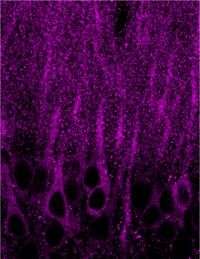
Researchers have uncovered new evidence in mice that may explain how emotionally charged situations can leave such a powerful mark on our memories. Surges of the stress hormone norepinephrine (also known as noradrenaline) that often accompany strong emotions spark a series of molecular events that ultimately strengthen the connections between neurons, the team reports in the October 5, 2007, issue of the journal Cell.
“This phenomenon is something everyone can identify with,” said Roberto Malinow of the Cold Spring Harbor Laboratory in New York. “You can probably remember where you were when you heard about 9/11, but you probably don’t know where you were on 9/10. We've identified one mechanism that may underlie this effect.”
The parts of the brain where memories are stored need to distinguish between significant experiences and those that carry less importance, giving priority to the transformation of the former into long-term memory, the researchers explained. One factor that scientists believe to be critical in that process is the emotional load of an event. Indeed, studies have shown that heightened states of emotion can facilitate learning and memory. In some situations, this process can even become pathological, Malinow said, as occurs in posttraumatic stress disorder (PTSD), a condition characterized by persistent vivid memories of traumatic events.
The stress hormone norepinephrine was known to play a central role in the emotional control of memory through its effect on receptors in the brain. During emotional arousal, the stress hormone is released by neurons that project widely to many brain regions, including the hippocampus and the amygdala, which are involved in the formation of emotional memory.
Brain stimulation by norepinephrine had also been found to induce a phenomenon known as long-term potentiation (LTP). LTP involves a lasting increase in the strength of nerve connections, or synapses. That process is considered to be the cellular basis for learning and memory.
“There were all these potential ways in which excitability or transmission might be enhanced by norepinephrine,” said Manilow. Yet, exactly how the stress hormone influences the processes involved in memory formation remained mysterious.
One way to strengthen synapses is to increase the number of so-called GluR1 receptors at neurons’ receiving ends, he added. Malinow’s group now shows that norepinephrine can do just that.
In studies of mice, they revealed that norepinephrine, as well as emotional stress, leads to the addition of a chemical phosphate group to GluR1 receptors at sites that play an important role in their delivery to nerve synapses. That chemical modification is both “necessary and sufficient” to lower the threshold for the receptors’ incorporation during LTP—thereby boosting memory, they showed.
In behavioral tests of the animals, the group found that norepinephrine exposure can make normal mice remember events more clearly. By contrast, mice carrying mutations in their GluR1 receptors, specifically at the sites where phosphates would be added, didn’t respond to norepinephrine with sharper recall.
The brains of mice have “all the same parts” found in the human brain, Malinow said, and tests of emotional memory in people have shown that blocking the receptors for norepinephrine reduce the effects of emotion on learning and memory. “We expect that the molecular mechanisms are the same, as well,” he said.
He emphasized, however, that the current study is just one piece of a much larger puzzle of how emotion influences memory. It also remains unclear whether the newly identified mechanism plays a direct role in conditions such as PTSD. Nonetheless, he said, “we’ve identified one potential therapeutic target. It may be possible to develop drugs that could prevent too many brain receptors from being added or that might remove them once they are there.”
Source: Cell Press


