3D Navigation System — Even for Off-roaders
February 22, 2006 3D Navigation System — Even for Off-roaders

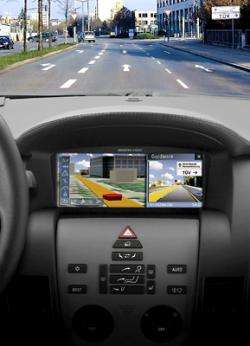
Siemens has developed a navigation system with a three-dimensional map display. These true-to-life images of entire streets and intersections make it easier for drivers to find their destinations even in unfamiliar urban areas. The system will be launched on the market in mid 2008.

In contrast to systems commonly used today, this new navigation system from Siemens VDO Automotive displays different levels at highway interchanges. To ensure better orientation in cities, digitized images of eye-catching structures will be integrated into the system. With just the push of a button, users will also be able to call up on their displays tourist information, such as the opening times, admission prices and telephone numbers of museums, theaters and other attractions. By the planned start of mass production, this information service will cover 100 of the largest cities in Europe.

Regarding the large volumes of data, the system runs from a hard disc. Superimposition of four different digital maps makes this three-dimensional navigation possible. The basis is formed by a digital terrain model that gives the gradient of the land with its high and low points. Superimposed over this model are digitized satellite photos. Another layer consists of digitalized 3D-buildings and contours of buildings which the system uses to generate three-dimensional views of cities. Finally, a digital street map – like today’s navigation maps – completes the picture.

And the system will also be a hit with drivers of off-road vehicles: The terrain model also displays areas away from the main road network, so the system can calculate routes through wooded areas and fields. The navigation process automatically takes this data into account for cross country drives. An advanced version of the system is already in the planning stages. Soon, a camera installed on a vehicle’s front will record and digitize images of traffic lights and traffic signs, which will appear in synchronization in the navigation display.

Source: Siemens


print this article email this article download pdf blog this article bookmark this article     Stumble it Digg this share on Facebook retweet share on Reddit add to delicious
Rate this story - 3.4 /5 (24 votes)


February 22, 2006 all stories

Comments: 0

3.4 /5 (24 votes)
  • Stumble this up

  • Digg this

  • share this

  • hide
  • Related Stories


Other News

Samsung launches a new vacuuming robot

Samsung launches a new vacuuming robot

Electronics / Consumer & Gadgets

created Nov 06, 2009 | popularity 4.4 / 5 (7) | comments 8

(PhysOrg.com) -- Samsung Electronics has launched its latest autonomous robot vacuum cleaner, the Tango, which is capable of vacuuming hardwood floors, carpets, and even beds without human assistance.


new iphone

Touchscreen smartphones being snatched up in US

Electronics / Consumer & Gadgets

created Nov 03, 2009 | popularity 2.7 / 5 (3) | comments 3

US smartphone buyers can't wait to get their hands on touchscreen devices, according to figures released Tuesday by industry tracker comScore.


Robot fish could monitor water quality

Robot fish could monitor water quality

Electronics / Robotics

created Nov 02, 2009 | popularity not rated yet | comments 2

Nature inspires technology for an engineer and an ecologist teamed up at Michigan State University. They're developing robots that use advanced materials to swim like fish to probe underwater environments.


Review: Motorola's Droid is a serious smart phone (AP)

Review: Motorola's Droid is a serious smart phone

Electronics / Consumer & Gadgets

created Nov 04, 2009 | popularity 4.6 / 5 (5) | comments 0

(AP) -- Since its debut in 2007, millions of people have gravitated toward Apple's iPhone, wooed by its sleek hardware, simple user interface and abundance of applications.


UCI robot to aid brain research

UCI robot to aid brain research

Electronics / Robotics

created Nov 04, 2009 | popularity 5 / 5 (1) | comments 0

(PhysOrg.com) -- A robot powered by a computerized model of a rodent brain will help researchers from UC Irvine and UC San Diego understand how people recognize and adapt to change.