Scientists Sequence Genome of Soil-Dwelling Green Alga
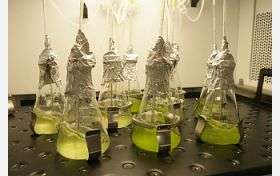
The genome analysis of a tiny green alga has uncovered hundreds of genes that are uniquely associated with carbon dioxide capture and generation of biomass. Among the 15,000-plus genes revealed in the study are those that encode the structure and function of the specialized organelle that houses the photosynthetic apparatus, the chloroplast, which is responsible for converting light to chemical energy. The genome also provides a glimpse back through time to the last common ancestor of plants and animals.
The project, led by the U.S. Department of Energy Joint Genome Institute (DOE JGI); the University of California, Los Angeles; and the Carnegie Institution, and including contributions from over 100 international collaborators, is featured in the Oct. 12 edition of the journal Science.
The single-celled alga Chlamydomonas reinhardtii, while less than a thousandth of an inch in diameter, or about one fiftieth the size of a grain of salt, is packed with many ancient and informative surprises. Affectionately known to its large research community as "Chlamy", the alga is a powerful model system for the study of photosynthesis and cell motility. The genes that encode the alga's "flagella", which propel it much like a human sperm tail, were also cataloged in this study. Defects in these genes are associated with a growing list of human diseases.
"The Chlamy genome is like a green time capsule that affords a view into the complex core machinery that gave rise to today's energy-capturing and oxygen-producing chloroplasts," said Daniel Rokhsar, DOE JGI Computational Biology Program head, who co-led the effort with DOE JGI Computational Scientist Simon Prochnik, Arthur Grossman of the Carnegie Institution and Stanford University, and Sabeeha Merchant of UCLA.
"DOE JGI's particular interest in Chlamy centers on its keen ability to efficiently capture and convert sunlight into energy, and its role in managing the global pool of carbon," said Rokhsar. The sequence analysis presents a comprehensive set of genes--the molecular and biochemical instructions--required for these capabilities. Rokhsar said that with these data now publicly available, new strategies for biology-based solar energy capture, carbon assimilation, and detoxification of soils by employing algae to remove heavy metal contaminants will begin to surface. The analysis will also shed light on the capabilities of related algae that can produce biodiesel and biocrude as alternatives to fossil fuels.
The results will also help researchers figure out the construction of chloroplasts, which house the machinery inside plant and algal cells that serves as "solar panels," absorbing sunlight and coupling carbon dioxide and water to produce the starting materials, sugars, that fuel all other metabolic processes. These pathways, described in the DNA sequence, represent opportunities for improving efficiencies for this conversion process and ultimately biofuels production.
"Chlamy's code helps us describe the ancient ancestor of plants and animals that lived over a billion years ago," said Merchant. "The work has generated a clear roadmap for exploring the roles of numerous genes in photosynthetic function, for defining the structure and dynamic aspects of flagellar function, and for understanding how the soil environment, with its large fluctuations in nutrients, has molded the functionality of organisms through evolutionary time."
Chlamy competes for scarce nutritional resources against a panoply of other microorganisms in its native freshwater and soil habitats, and it has evidently succeeded by evolving a large arsenal of proteins to transport raw materials into the cell. Over the ages, as plants and animals have specialized, scores of species have lost facets of these capabilities.
"Yet Chlamy possesses the largest known array of enzymes that manufacture the signaling molecules cyclic AMP and cyclic GMP. These cyclic nucleotides play key roles in shuttling nutrients into the cell, controlling motility of the organism via flagellar function, and determine sexual development," said Prochnik.
The published analysis of approximately 120 million units of DNA sequence generated by DOE JGI showed that Chlamy shares nearly 7,000 genes with other organisms; more than a third of these are shared by both humans and flowering plants, which helps support the argument for their common ancestry. Many of these genes are normally associated with animals, such as those that describe the circuitry for flagella, enabling this alga to swim. Others have affinity with the earth's early photosynthetic organisms, cyanobacteria, dating far back into Precambrian times, more than three billion years ago, when biodiversity began its explosive proliferation.
"Although Chlamydomonas is a plant, there are clear similarities between this photosynthetic organism and animals that would surprise the average person on the street," said Grossman. "Just 20 years ago, no one would have guessed that an alga would have retained many of the functions we associate with humans and would be useful for developing a basic understanding of certain human diseases."
This resource may inform possible therapeutic strategies for human diseases associated with the fine hair structures of the cilia and flagella--for instance, the neurological movement disorder dyskinesia; polycystic kidney disease (PKD); and some forms of liver, respiratory and retinal degeneration disease.
Source: Joint Genome Institute


