Study of bacterial communities may provide climate-change clues
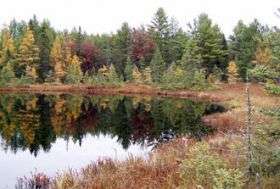
As part of the world carbon cycle, bacterial communities in freshwater lakes break down carbon in decaying organic matter, converting it into carbon dioxide that is released into the atmosphere.
However, in humic lakes - darkly stained, bog-rimmed bodies of water that contain high levels of decaying organic matter - this process creates even higher carbon-dioxide emission levels. "There's a lot of concern that, as the climate changes, more carbon will be turned into carbon dioxide in these kinds of lakes," says Katherine McMahon, a University of Wisconsin-Madison assistant professor of civil and environmental engineering.
With $1.5 million from the National Science Foundation, McMahon is among a multidisciplinary group of UW-Madison and University of Illinois Urbana-Champaign researchers that is studying the composition of bacterial communities in humic lakes and how these microorganisms respond to changes in their environment.
This fundamental "systems" knowledge may help researchers develop more accurate ecosystem-level models, which enable them to predict carbon or nutrient flow through the system. It also may give high carbon-dioxide-emitting humic lakes greater weight in climate-change models.
Because they are giant receptacles for fallen leaves, tree limbs and other organic debris, lakes are prime carbon-storage areas, says McMahon. "They store a lot of carbon in their sediments," she says. "But we don't understand very well how that carbon is then mobilized to become CO2 by the bacteria."
For years, ecosystem scientists have studied the process of ecological succession; for example, after a fire destroys a section of forest, the established order in which ecosystem members - grass, bushes, softwoods, hardwoods and so on - repopulate the area.
Recently, McMahon and graduate students Stuart Jones, Ashley Shade and Ryan Newton discovered that, while bacterial populations differ in composition and function based on lake type, these microorganisms engage in a similar succession process - but on an annual time scale.
So, barring disturbances such as increased storms or land use changes, bacteria in a water sample taken on a given date in one year will resemble closely those in a sample taken on the same date in the following years. "We want to know what's going to happen to those kinds of patterns, or those kinds of trajectories, when the climate changes, when land use changes, when we have increased storm events - because the bacteria are very sensitive to the physical environment," says McMahon.
That sensitivity is what makes bacteria difficult to study; in fact, they are so adaptive to their environment that culturing them for laboratory research is of little value. "They lose whole parts of their genetic material when you bring them into the lab," says McMahon.
Taking weekly water samples from a northern Wisconsin humic lake, the researchers will use new DNA-based tools to study how these quick-growing microorganisms change in response to their environment. They also hope to learn how bacteria speciate. In addition, they will study how bacteria interact with algae in humic lakes and whether the organisms affect which bacterial species are present.
At this point, says McMahon, the goal is understanding bacterial processes and ecology. "Solutions will come once we understand the systems behind the problems," she says.
McMahon is leading the project in collaboration with eight other principal investigators. At UW-Madison, her colleagues include civil and environmental engineering Associate Professor Chin Wu; Timothy Kratz, Trout Lake research station director and a Center for Limnology senior scientist; Center for Limnology Senior Scientist Barbara Benson; Trout Lake Senior Scientist James Rusak; soil science and civil and environmental engineering Associate Professor Joel Pedersen; and botany Professor Linda Graham. The University of Illinois researchers include natural resources and environmental sciences Assistant Professor Angela Kent and microbiology Assistant Professor Rachel Whitaker.
As part of the grant, the researchers will conduct a variety of related educational and outreach initiatives in collaboration with UW-Madison Center for Biology Education outreach program Director Robert Bohanan; staff in the UW-Madison Center for the Integration of Research, Teaching and Learning; and staff in the Center for Limnology. These initiatives will target educational materials about microbial science, water resources and aquatic environments to K-12 students and provide professional-development resources to their teachers. Building on established initiatives, the researchers' educational activities also will include underrepresented high school students who participate in the UW-Madison Pre-college Enrichment Opportunity Program for Learning Excellence (PEOPLE), and undergraduate and graduate students.
Source: University of Wisconsin-Madison


