Intelligently designed molecular evolution
Evolutionary paths to new therapeutic drugs, as well as a wide assortment of other enzyme products, have been created through, of all things, intelligent design. A team of researchers with the Lawrence Berkeley National Laboratory (Berkeley Lab) and the University of California at Berkeley have developed a technique in which the evolution of an important class of proteins is steered towards a desired outcome.
"We've taken enzymes that are promiscuous, meaning they have the capacity to evolve along many different functional lines, and trained them to become specialists," said chemical engineer Jay Keasling, who led this study.
"This technology could be used by pharmaceutical manufacturers in the future to create specific enzyme products."
Keasling is director of Berkeley Lab's Physical Biosciences Division, and a professor of chemical engineering with UC Berkeley's Chemical Engineering Department. Collaborating with him on this project were his graduate student, Yasuo Yoshikuni, and Thomas Ferrin, a professor of pharmaceutical chemistry and biopharmaceutical sciences at UC San Francisco.
The results of this study were reported in the February 22, 2006, on-line edition of the journal Nature.
According to the theory of divergent molecular evolution, primordial enzymes and other proteins started out as "promiscuous" so that primitive organisms would be better able to adapt to their environment. Driven by selective pressures, these promiscuous enzymes and other proteins evolved along divergent lines to acquire the specialized functions needed by a host organism to survive.
"This process is highly dependent on the fact that the functions of promiscuous proteins can be altered with just a small number of amino acid substitutions, a property known as plasticity," said Keasling. "It was our contention that the application of the theory of divergent molecular evolution to promiscuous enzymes would enable us to design enzymes with greater specificity and higher activity."
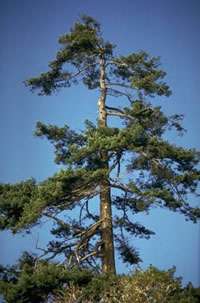
To test this idea, Keasling and his students worked with a type of naturally occurring hydrocarbon compounds, called sesquiterpenes, that is widely used in a variety of products. For their model enzyme, they selected a sesquiterpene synthase produced by the Grand fir tree, which has the capacity to develop into any of 52 different sesquiterpenes from a sole substrate.
"This Grand fir sesquiterpene synthase represents the ultimate in promiscuous enzymes," said Yoshikuni. "We were able to take it and construct seven specific and active enzymes synthases. These seven enzymes use different reaction pathways to produce specific products that are as diverse as they can be from one another."
In nature, the divergent evolution of promiscuous enzymes is achieved through trial and error, similar to the way in which the human immune system works. Multiple combinations of many different amino acid substitutions are tested in promiscuous enzymes until an evolutionary path that achieves a desired result is found. The amino acid substitutions that significantly drive molecular evolution are called "plasticity residues."
The Berkeley researchers identified the plasticity residues for the Grand fir sesquiterpene synthase, then systematically recombined mutations of these residues through site-directed mutagenesis, based on a mathematical model developed by Yoshikuni. Construction of the seven sesquiterpene synthases was accomplished with the screening of fewer than 2,500 mutants. An alterative approach, called directed evolution or molecular breeding, that is currently being tested at other laboratories, requires the screening of tens of thousands to a million or more mutants.
"The enzyme synthase was there ready to be evolved, and with our methodology, we were able to rapidly and efficiently evolve it down a pathway of our choice," Keasling said. "We are recapitulating evolution into intelligent design. In the case of this particular Grand fir enzyme synthase, it naturally makes a soup of small amounts of 52 different products. We were able to focus it instead on making large amounts of one of seven of those products."
While the researchers have not yet reached the point where they can design a promiscuous enzyme to make any kind of product they want, even one that does not occur in nature, this demonstration represents a significant step in that direction. The idea would be to one day be able to design an enzyme synthase that would evolve along a specific functional pathway to yield a desired molecular product, then introduce it into microbes for mass production. In addition to synthesizing therapeutic drugs, other possible applications would include flavors, fragrances and nutraceuticals.
"Our ultimate goal is to be able to put as much chemistry as we can into microbes," said Keasling, a pioneer and leading authority in the burgeoning scientific field of synthetic biology. "We can use microbes to do a lot of complicated chemistry, and the way in which this will be done is through the use of enzymes. One can imagine where you could take a series of promiscuous enzymes that would make different parts of a molecular compound, and combine them to obtain a final product that could do whatever you needed it to do."
Since plasticity residues also play other important biological roles, in addition to the evolution of promiscuous proteins, Keasling and Yoshikuni said their technology, with some modifications, could prove useful for designing novel functions into other types of enzymes and proteins, as well as protein ligands and receptors, transcription factors and antibodies.
Source: Lawrence Berkeley National Laboratory


