Research team works on tyre-ice friction
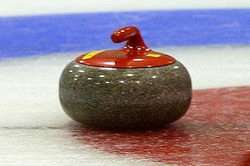
Experts from Scotland's Edinburgh University are working on a study aimed at developing electronic brooms to help cars stay on icy roads, reports Nature News. The Scottish scientists have teamed up with Olympic curlers in what could prove a major advance in road safety.
When the University’s team, led by Jane Blackford, began helping the UK’s Olympic curling team, they began to discover more about how different materials slip on ice. The resulting study could be a rare example of winter sports driving scientific progress.
The team is now working to develop tyre-ice friction on Ford and Jaguar cars. The fully developed technology would help drivers control their cars in winter when roads are icy and slippery.
Based on a ‘sweep ergonometer’, that the team developed for the curlers to train with in 2000, the mechanism measures the movements of the brush and the force with which it pushes the ice.
While the curlers trained, the research team evaluated the effectiveness of the sweeping.
To examine how ice melts under pressure, the team designed and built an instrument to study the process. The instrument was similar to a miniature record player, with a steel or rubber needle used to drag over a rotating disk of ice. When used by the curlers the team examined the ice with an electron microscope.
The experiment throws light on how force, temperature and other factors affect the movement of materials on ice – findings that will help car manufacturers improve the rubber content of tyres and improve braking systems.
Copyright 2006 PhysOrg.com


