Scientists ramp up ability of poplar plants to disarm toxic pollutants
Scientists since the early '90s have seen the potential for cleaning up contaminated sites by growing plants able to take up nasty groundwater pollutants through their roots. Then the plants break certain kinds of pollutants into harmless byproducts that the plants either incorporate into their roots, stems and leaves or release into the air.
The problem with plants that are capable of doing this is that the process is slow and halts completely when growth stops in winter. Using plants in this way, a process called phytoremediation, often hasn't made sense given the timetables required by regulatory agencies at remediation sites.
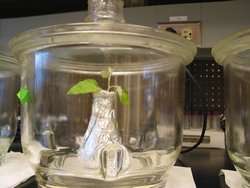
Scientists led by the University of Washington's Sharon Doty, reporting in this week's Proceedings of the National Academy of Sciences, say that genetically engineered poplar plants being grown in a laboratory were able to take as much as 91 percent of trichloroethylene, the most common groundwater contaminant at U.S. Superfund sites, out of a liquid solution. Unaltered plants removed 3 percent. The poplar plants – all cuttings just several inches tall growing in vials – also were able to break down, or metabolize, the pollutant into harmless byproducts at rates 100 times that of the control plants.
While federal regulations allow the growing of transgenic trees in greenhouses and controlled field trials for research purposes, they do not allow the commercial growing of transgenic trees. A transgenic plant is one in which its genetic material is manipulated. Sometimes only its own genetic material is altered and sometimes genetic material is added from other plants, bacteria or animals.
The work being published this week raises the interesting question of the potential for using transgenic trees on sites where toxic plumes of pollutants are on the move in groundwater.
"Small, volatile hydrocarbons, including trichloroethylene, vinyl chloride, carbon tetrachloride, benzene, and chloroform, are common environmental pollutants that pose serious health effects. Some of these are known carcinogens," Doty, an assistant professor of forest resources, said.
Trichloroethylene is a heavily used industrial degreaser that's made its way into groundwater because of improper disposal. Both unaltered poplars and the transgenic poplar plants produce the enzymes to break down trichloroethylene, C2HCl3, into chloride ions – harmless salt that the plant sheds – and recombines the carbon and hydrogen with oxygen to produce water and carbon dioxide.
The transgenic poplar plants just do it a lot faster. The enzymes used to metabolize the contaminants are from a group called cytochrome P450 found in both plants and animals. Poplars have a lot of P450s and Doty said scientists hope to eventually sort them to find ways to manipulate the plant's own genes to ramp up pollution degradation. In the meantime they are conducting experiments inserting a gene that produces cytochrome P450 in mammalian livers, in this case the livers of rabbits. Poplar genes producing cytochrome P450 is expressed in all their cells, but not at the rates achieved by the transgenics.
"We overcame the rate-limiting step by causing the poplar plants to overexpress the first enzyme in the degradative pathway," Doty said. "Using the mammalian gene is just a step toward the day when we understand the poplar P450 genes well enough to use promoters to enhance production of their own enzymes that degrade contaminants. With the plant's own genes, the results should be even better."
Mammalian cytochrome P450 has already been used in transgenic plants that can detoxify herbicides applied to fields to kill weeds. Japanese researchers, for example, published findings in 2005 about using a human gene to make rice plants degrade a suite of herbicides, something they said could help reduce the load of herbicides in paddy fields and streams.
Along with the trichloroethylene tests, the new results also found improved rates of uptake from solutions of chloroform, the byproduct of disinfecting drinking water; carbon tetrachloride, a solvent; and vinyl chloride, a substance used to make plastics. In air pollution experiments using 6-inch plants in closed containers, the transgenic plants had increased absorption of gaseous trichloroethylene and benzene, a pollutant associated with petroleum.
Work on phytoremediation at the UW has been funded by the National Institute of Environmental Health Sciences, National Science Foundation, Environmental Protection Agency and Department of Energy.
Doty and her colleagues plan to do additional experiments to determine the detoxification rates when poplars are grown in soils, and to ensure that plant tissues do not harm non-target organisms, such as bugs that might chew on them.
Sites with contaminated groundwater are treated in a variety of chemical, physical and microbial ways, says Stuart Strand, UW professor of forest resources and a co-author of the paper. In some places the groundwater is pumped out of the ground and the contaminants allowed to evaporate into the air. In other places sugars pumped into the ground can clean contaminants but make the water anaerobic – oxygen starved – and can produce other toxic byproducts, he says.
"It's destructive, disruptive and expensive," Strand says.
Some people see transgenic trees as risky. "As researchers we want to make sure such concerns are addressed and risks minimized. In the case of contaminated sites, we're already facing bad situations where the use of transgenic plants may reduce the known risks from carcinogens and other hazardous pollutants in the environment. Our ultimate goal is to provide a more rapid way to reduce the amount of carcinogens, one that is affordable so many sites can be treated," Doty said.
Because there is concern that transgenic trees might get into regular forests, Doty and her colleagues believe poplars may be a good choice, she said. Poplars are fast growing and can grow for several years without flowering, at which time they could be harvested to prevent seeds from generating. And unlike some other kinds of trees, branches of the hybrid poplar being studied do not take root in soils when branches fall to the ground.
Even though these things are true, Doty and her co-authors imagine that transgenic trees planted at contaminated sites would involve high levels of containment around where they are being grown.
"Commercial use of these trees requires federal regulatory approval and monitoring, and regulations are becoming increasingly strict for transgenic plants intended for biopharmaceutical or industrial purposes, including phytoremediation," the co-authors write in their paper.
Source: University of Washington


