Engineers developing new cements to heal spinal fractures
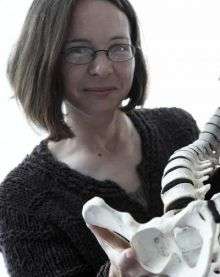
New research could offer hope for victims of the most devastating spinal injuries - typically those caused in car crashes.
Biological cements to repair ‘burst fractures’ of the spine are being developed and tested in a major new collaborative project between the University of Leeds and Queen’s University Belfast. The team has been awarded just under £500,000 by the Engineering and Physical Sciences Research Council (EPSRC) to develop and examine the effects of novel cement materials for the treatment of burst fractures.
Bone cements, similar to those used in joint replacement surgery, are already being used to strengthen damaged vertebrae of patients with diseases such as osteoporosis, in a procedure known as vertebroplasty, but ‘burst fractures’ to the spine, injuries often sustained in major impact accidents and falls, are much more difficult to treat. They account for over 1,000 emergency NHS admissions each year and often require highly complex, invasive surgery and a long stay in hospital.
“This type of fracture causes the vertebra to burst apart and in severe cases fragments of bone can be pushed into the spinal cord,” says Dr Ruth Wilcox of Leeds’ Institute of Medical and Biological Engineering. “Surgeons may be able to join bone fragments together and stabilize the spine with the use of metal screws and rods, but patients with these injuries are often in a really bad way, so the less invasive the treatment, the better.”
The project team at Queen’s has expertise in developing and testing synthetic biomaterials for the repair of bone defects. “These materials can be delivered to the fracture site by injection and mimic the chemical composition of bone itself,” says Dr Fraser Buchanan, from the University’s School of Mechanical and Aerospace Engineering.
At Leeds the team has expertise in computational modelling of the spine and will be able to provide Queen’s with data to assist in the development of novel biomaterials and to simulate how they will perform in patients.
Statistically, burst fractures are seen more in younger people, and not enough is currently known about the long term consequences of using existing cements for the treatment of this type of injury. There is evidence to show that some patients with osteoporosis, who tend to be older, can develop fractures in the vertebrae adjacent to those treated with vertebroplasty.
“We think this may be because current cements are stiffer than the bone itself causing an imbalance in the way the spine bears weight. This may increase loading on the neighbouring vertebrae, which can lead to further damage” says Dr Wilcox.
“Clearly we need to develop biomaterials that more closely match the properties of real bone. This project offers the perfect opportunity to use the range of complimentary skills of this grouping to predict the effects of newly developed cements and even incorporate biological agents to assist the body’s own healing process,” added Dr Buchanan.
To be able to use bone cements for burst fractures would be a major leap forward. It would be simpler, quicker and much less invasive for the patient, reducing both recovery times and NHS costs.
Source: University of Leeds


