Researchers show evidence of 'memory' in cells and molecules
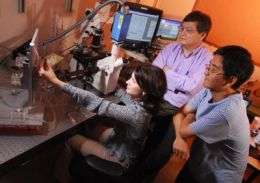
Research to be reported October 29 in the journal Proceedings of the National Academy of Sciences provides evidence that some molecular interactions on cell surfaces may have a “memory” that affects their future interactions. The report could lead to a re-examination of results from certain single-molecule research.
Researchers who use sequentially repeated tests to obtain statistical samples of molecular properties usually assume that each test is identical to – and independent of – any other tests in the sequence. In their article, however, researchers at the Georgia Institute of Technology provide examples of test sequences that may not be composed of independent and identically-distributed (i.i.d.) random variables.
“If you are probing a cell to get a bit of information, how do you know that the cell is not going to respond by changing the information it reveals the next time you probe it?” asked Cheng Zhu, a Regents’ Professor in the Coulter Department of Biomedical Engineering at Georgia Tech and Emory University. “If you are probing a molecule, can you assume that the molecule will return to its original configuration before you test it the next time? We didn’t think about this until we had been doing these kinds of experiments for more than ten years.”
Supported by the National Institutes of Health, the research demonstrates that certain cells can “remember” their earlier encounters through specific receptor-ligand interactions. That would mean that some sequential measurements may not have been truly independent, and could therefore prompt re-examination of some research that obtained data under the i.i.d. assumption.
“People doing research in this area ought to look at what we have found to see if their systems also have memories that may have affected their conclusions,” Zhu said. “They may discover new aspects that may have been overlooked.”
Using a micropipette adhesion frequency assay, Zhu’s research team studied a number of receptor-ligand interactions. The sequence data analysis conducted by Veronika Zarnitsyna, a research scientist in the Coulter Department, revealed examples in which an interaction observed in one test affected the outcome of a future test. Depending on the biological system, the effect could either increase or decrease the likelihood of a future interaction.
For instance, interaction between T cell receptors and an antigen bound to major histocompatibility molecules showed positive correlation, with one interaction increasing the likelihood of a future interaction. Interaction between C-adherins exhibited the opposite behavior, with one interaction reducing the likelihood of a future interaction. In a third system the researchers studied, the events appeared to be truly independent, with one interaction not affecting a future one.
“The i.i.d. assumption in single-molecule experiments was something that people usually took for granted,” Zarnitsyna said.
The research reported in PNAS began when Jun Huang, a graduate student in the Zhu lab, examined T cell test data and noted a distinct difference: interactions appeared consecutively in long strings and then disappeared for a long while. Huang asked Zhu about the pattern. Zhu then shared his concerns about the independence of the tests with Zarnitsyna, a biophysicist.
Zarnitsyna analyzed data generated by Huang and Fang Zhang – another graduate student in the Zhu lab – and additional data obtained in the lab by Yuan-Hung Chien, a student from the laboratory of Deborah Leckband at the University of Illinois at Urbana-Champaign.
“Positive memory increases the likelihood of having two interactions in a row, which generates long strings of interactions,” said Zarnitsyna. “The negative memory, conversely, decreases the likelihood of having consecutive interactions, which results in more solitary interactions in the sequence.”
Zhu compares the negative correlation to the effects of strong light on the eyes. “If you go from the dark to the bright, time is required before you can see well again,” he noted. “Exposure to strong light temporarily inhibits the eyes’ response to the next input.”
Zhu’s research team studies single-molecule mechanics using sensitive force techniques, such as atomic force microscopes and biomembrane force probes, to put cells and molecules together and then measure the forces or times required to pull them apart. Ideas developed for the adhesion frequency assay may also be applicable to this research because the i.i.d. assumption is violated if the force or time depends on where in a test sequence it was measured.
As a next step, Zhu would like to further characterize the memory effect to determine how long it lasts. “It seems reasonable that if you prolong the cycle time – the period between trials – the cell or molecule would gradually forget,” he said.
He would also like to study the biological mechanisms of the memory effects.
“We believe this phenomenon may be biologically important, though we don’t yet know the implications for it,” Zhu said. “This may represent a way for cells to regulate their adhesion and signaling. For T cells, the ability to ‘remember’ even a brief interaction with a pathogen may be related to their ability to tell an intruder from “self” molecules, which is crucial to the body’s defense in the immune system.”
Source: Georgia Institute of Technology


