A faster, more sensitive method for detecting anthrax
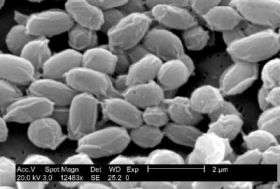
Amid continuing concerns that anthrax might be used as a bioterrorism weapon, government researchers report development of a faster, more sensitive blood test for detecting the deadly toxins produced by the anthrax bacterium, Bacillus anthracis. The test produces results in only 4 hours and could save lives by allowing earlier detection of infection, they say.
Their study is scheduled for publication in the Nov. 22 issue of ACS’ Analytical Chemistry, a semi-monthly journal.
Standard identification of anthrax (Bacillus anthracis) infection relies on a combination of time-consuming steps, including cell culture and gene amplification, which can take several days to provide a diagnosis and have limitations for detecting early stages of infection. Early diagnosis is critical for effective treatment of pulmonary or inhalation anthrax, the most deadly form.
John R. Barr and colleagues in a multi-center team effort used a form of mass spectrometry to detect the presence of ‘lethal factor,’ the key toxin produced by the anthrax bug, in the blood of monkeys with inhalation anthrax. The method took only four hours to identify the toxin and detected it at very low levels, demonstrating its potential for early detection of infection, the researchers say.
The new method also shows promise as a research tool for providing a better understanding of the anthrax infection cycle and for evaluating the effectiveness of different therapies and methods to fight infections.
Source: ACS


