Texas' first hydrogen fuel cell bus on the road
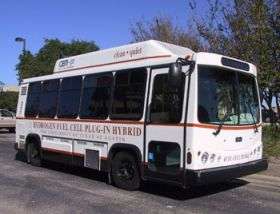
The University of Texas at Austin and Gas Technology Institute (GTI) have introduced a joint technology program that features the first hydrogen fuel cell bus to be licensed and operated in Texas.
In this program, The University of Texas at Austin, Center for Electromechanics and GTI will operate and evaluate a 22-foot shuttle bus powered by a hybrid electric drivetrain that combines energy provided by both advanced battery electronics and a 20 kilowatt hydrogen-powered fuel cell. The fuel cell hybrid system is expected to give the bus a range of up to 200 miles, three to four times farther than with batteries alone.
Ebus Inc. designed the bus, built specifically for the university and GTI. The bus has full highway capability and has features, such as regenerative braking, that make it exceptionally fuel-efficient.
The partners have also begun installation of the first permanent hydrogen fueling station in Texas at the J.J. Pickle Research Center in Austin.
This station will generate hydrogen from natural gas and will be available to dispense high purity hydrogen fuel, allowing for additional hydrogen-fueled vehicles to be located in the Austin area. It is a fully integrated hydrogen fueling station that allows for the generation, compression, storage and dispensing of hydrogen on-site. GreenField Compression, the Texas-based, North American Division of Atlas-Copco, is commercializing the technology.
The deployment of the bus and fueling station is the foundation of a new program for very low-emissions vehicles in Texas. It will include training and public outreach based on these new technologies to ensure success for future Texas deployment.
The hydrogen station and fuel cell bus deployment builds upon efforts funded by the U.S. Department of Energy, the Texas Commission on Environmental Quality, the U.S. Department of Transportation Federal Transit Administration, GTI, the Texas State Energy Conservation Office, the Center for Transportation and the Environment and The University of Texas at Austin.
Over the course of this multi-year program, the university and GTI expect to introduce and evaluate additional vehicle and fueling technologies that will be demonstrated in Austin and surrounding areas.
"In this program, we will use the university's specialized computer modeling to assist local transit authorities in making good decisions on emerging vehicle technologies," said Robert Hebner, director of the university's Center for Electromechanics. "This program will demonstrate that vehicles using less fuel with cleaner emissions are here today—not in the distant future."
"The lack of a hydrogen infrastructure has been identified as the single largest impediment to the commercial roll-out of hydrogen vehicles," said Tony Lindsay, manager of GTI's Advanced Energy Systems Group. "This advanced vehicle and fueling technology program demonstrates that hydrogen fueling systems can be reliable and are commercially ready."
"Hydrogen is a safe fuel, but it's expensive to transport and store," said Brian Weeks, GTI's local project manager. "On-site generation cuts the cost and brings hydrogen into the price range of conventional fuels."
The University of Texas at Austin and GTI are working to create advanced transportation and fueling technologies that can be used by their commercial partners to develop and introduce products that reduce harmful tailpipe emissions and that help reduce the nation's dependency on foreign sources of energy for transportation fuels. They hope to announce additional project partners in coming weeks.
Source: University of Texas at Austin


