Chocolate drinks - probably fermented ones - popular long before previously thought, says anthropologist
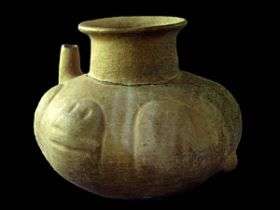
Mesoamerican menus featured cacao beverages - probably fermented ones - at least as early as 1100 B.C., some 500 years earlier than previously documented anywhere, according to new research published in the latest issue of the journal Proceedings of the National Academy of Sciences.
The paper, "Chemical and archaeological evidence from the earliest cacao beverages," summarizes the landmark research of anthropologists Rosemary Joyce of the University of California, Berkeley, and John S. Henderson an anthropology professor of Cornell University, as well as of Gretchen R. Hall, a research associate with the Museum Applied Science Center for Archaeology at the University of Pennsylvania Museum , W. Jeffrey Hurst of the Hershey Foods Technical Center in Philadelphia, and Patrick E. McGovern, a senior research scientist and adjunct associate professor of anthropology at the Museum Applied Science Center for Archaeology.
"The findings of this study take us near the time of the probable initial use of cacao in Mesoamerica," they write about cacao's introduction to the region of Central America and southern Mexico that was home to Olmec, Mayan and Aztec civilizations. A previous investigation confirmed the earliest consumption of cacao at 600 B.C. in Belize.
While pre-Columbian texts and preserved depictions document well the importance of cacao in Mesoamerican society in the millennium before the Spanish invaded, scientists have had to apply other means to reconstruct the earlier history of cacao, the botanical source of chocolate, which is produced from the seeds of the rainforest's Theobroma cacao tree.
This team conducted a chemical analysis of residues extracted from 13 pottery fragments from bowls, jars and bottles retrieved from different groups of buildings in two widely separated excavation areas in the small but wealthy village of Puerto Escondido in northern Honduras's fertile lower Rio Ulúa Valley. The valley has been documented as a major zone of cacao cultivation in the 16th century.
The residues, similar to the tea stains on a cup, were retrieved by boiling or heating the fired-clay pottery fragments in either distilled water, methane/methanol or chloroform/methanol, and then filtering the residues. The pieces, discovered in deposits that showed signs of domestic activity beginning before 1500 B.C., represented various vessel forms whose styles, shapes and decorations indicated their likely use for serving and drinking cacao beverages on special occasions, the researchers said.
Joyce said archaeologists have long known that the shapes of vessels changed dramatically in the period under examination, indicating an alteration in the way they were used. But without the residue analysis, that knowledge merely suggested a shift in how cacao was consumed. Although the chemical methods involved reflect "very old-fashioned science in some ways," said Joyce, applying them to the Mesoamerican pottery fragments required a baseline "signature" for cacao, which came from the Hershey-affiliated Hurst.
The fragments were analyzed with liquid chromatography, revealing evidence of theobromine, a chemical component unique to the cacao plant in Central America, and/or caffeine, on 11 of the 13 pieces. Radiocarbon dating showed one piece of pottery from a spouted bottle was produced around 380 B.C. Other samples were dated between 1050 and 1400 B.C., according to the article.
Chemical evidence does not distinguish between a beverage made from cacao seeds and a fermented drink called "chicha" that was made from pulp around the seeds because theobromine and caffeine are found in both parts of the cacao plant. But the researchers said the pottery vessels' round shapes point toward their use in pouring liquids like a fermented cacao drink. In the later Middle Formative period, spouted bottles with flaring necks were considered better for pouring frothy chocolate drinks.
Joyce, who has been conducting field research in Honduras since 1977, said it makes sense that a "chocolate beer" would have preceded development of the today's traditional chocolate because fermentation is a necessary step in its manufacture, after the pods are harvested and before the seeds are extracted, dried and toasted. She noted previous research pointed to corn as the source of the first fermented beverages, rather than cacao as she and her team have found.
Altogether, 10 of the 11 samples that tested positive for cacao came from either the Ocotillo Phase (1400 to 1100 B.C.) or Chotepe Phase (1100 to 900 B.C.). The Ocotillo Phase pottery is closely related to vessels from the Pacific Coast regions of El Salvador, Guatemala and Mexico, indicating Puerto Escondido's close connections and social ties with distant neighbors, the researchers said.
They concluded that the serving of cacao drinks in Puerto Escondido reflected the community's participation in far-flung networks of exchange that "strongly suggests the later crystallization and spread of an Olmec style did not involve a wave of one-way cultural influence emanating from the Gulf Coast region."
Puerto Escondido residents served cacao at celebratory events such as weddings and births to distinguish themselves socially and to create social obligations that contributed to the development of political influence. The researchers said the ritual also contributed to the emergence of elites like those Spanish conquistador Bernal Diaz del Castillo observed - and later wrote about - who served chocolate in the Aztec imperial court.
"They may have thought that they were cultivating cacao," Joyce said about the people of Puerto Escondido. "But cacao was cultivating them."
Moving up the earliest known date of cacao usage by 500 years, Joyce said, "vastly changes the models of how we think about cacao cultivation."
It also offers a delicious twist for modern chocolate lovers who think of chocolate as a solid rather than as a fermented drink, she said. It also serves up a new example of how archaeology can stand contemporary knowledge on its head, she added.
Joyce is chair of UC Berkeley's anthropology department. McGovern is an expert on the chemical analysis of ancient fermented drinks and has written a book about the pre-history of wine and fermented beverages.
Source: UC Berkeley


