Connection between startled response and schizophrenia
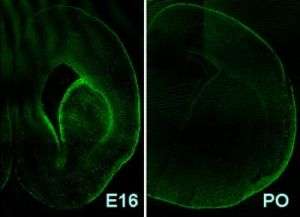
Schizophrenia is a debilitating psychiatric illness. Its cause is currently poorly understood, and there is no known cure. In a new study published online this week in the open-access journal PLoS Biology, Akiko Watanabe and colleagues report the identification of a gene linked to the condition.
Of particular interest to the study of schizophrenia is the so-called “gating” mechanism in the brain. This mechanism organizes information that comes from the sense organs, and when it malfunctions, it is believed to be responsible for the characteristic symptoms of schizophrenia: delusions, hallucinations, and social withdrawal.
Watanabe and colleagues, working in both Japan and the US, studied a behavior known to indicate a faulty gating mechanism: prepulse inhibition (PPI). A loud noise should make any animal jump, unless the noise is preceded by a quieter noise, which acts as a warning. However, in some individuals with schizophrenia, PPI fails. Even noises with a preceding quiet “warning” sound will cause a startle response. Watanabe et al. investigated PPI in over 1000 mice to identify genetic variation that might underlie differences in startle response. The search honed in on the gene Fabp7.
Fabp7 (fatty acid binding protein) is involved in brain development and mental signaling. Mice that had faulty PPI had greater amounts of Fabp7, and so did the brains of deceased human patients who had experienced schizophrenia. The paper also offers some hope for the future. The authors suggest testing the benefit of altered diet during pregnancy for women with a high risk of having schizophrenic babies, as changes in the amount of Fabp7 may be linked to problems with lipid metabolism.
Citation: Watanabe A, Toyota T, Owada Y, Hayashi T, Iwayama Y, et al. (2007) Fabp7 maps to a quantitative trait locus for a schizophrenia endophenotype. PLoS Biol 5(11): e297. doi:10.1371/journal.pbio.0050297 (www.plosbiology.org)
Source: Public Library of Science


